Posted on

Understanding Southwold is key to our success

Southwold estate agency success

Southwold. Arguably Suffolk’s most well-known town. Famous for its quirky pier, pretty beach huts, bustling high street, fish and chips and of course, Adnams brewery. But it’s something far more significant that makes Southwold so magical and unique explains Dominic Parravani, Managing Director and Head of Residential Sales.

Southwold is a town unlike any other. It’s a town of history and connections. One that’s been passed down from generation to generation along with the memories created along the way. A walk along the pier illustrates that beautifully, with the numerous plaques that line the promenade each capturing a treasured memory of someone with a special connection to the town. It’s understanding, respecting and nurturing this generational connection and being an active part of the community that make Durrants as successful as it is.

Durrants estate agency has had an office on Southwold High Street since 2007 when it took over from H A Adnams. Then, Adnams and Durrants were perfectly aligned in ethos and history both being local family firms, and that remains to this day. Durrants is an integral part of the Southwold community. The Company sponsors the town rugby club and plays a large part in the organisation of Southwold Arts Festival and the Christmas Lights festivities. The team aged, from 22 to 72, are all local and are truly passionate about the town and its surrounding area. The Company is well-respected and trusted by the local residents. So it’s no wonder that when selling a property in the town Durrants is often the first port of call.

“I strongly believe our history, our level of customer care, unrivalled local market knowledge, our team’s years of experience, and our involvement with local clubs, groups and associations is the reason we are the town’s leading agent.”

Of course sales performance also has something to do with Durrants’ success. According to Rightmove, in the first two and a half months of 2021, Durrants estate agency has outperformed its competitors in every way possible in the IP18 postcode area (Southwold and Reydon).
Of the properties on the market between 1st January and 17th March 2021, 56% were listed with Durrants. During the same period the Company secured over 59% of all new instructions; and perhaps most importantly Durrants has agreed the most sales – more than double that of its nearest competitor. This is a trend that has continued on the company’s success in 2020.

Durrants currently has 17 properties for sale in and around Southwold, from 1-bed apartments and fishermen’s cottages, to stunning sea-view Georgian villas and even George Orwell’s former home. There are some spectacular properties in the pipeline too. Browse the portfolio here.


Posted on

All you need to know about thatched roofs

thatched cottage walberswick building consultancy

So, you have seen your ideal cottage, but it has got a thatched roof and the fear of the unknown enters your purchasing decision.   What are the key considerations when considering when purchasing or owning a thatched property? 

Trevor Musk, company director and head of Durrants Building Consultancy explains.

It is costly to repair and replace a thatched roof?

The thatching cost usually is based on the area of roof to be thatched. Thatcher’s work on “square” 10 feet by 10 (100 square feet). The average roof is around 6 – 12 square although some properties are 4 square and some 80 square. The cost also depends on factors such as shape of the roof, type of material, design of the roof, ridge type and style whether wiring is required, the type of flashing required and more.

The thatcher may not know what work is required to the timbers before the original thatch is removed.  This can sometimes create an additional cost.

Always get your thatching quotations in writing so it is clear what you are being offered and also so that the thatcher is not asked to do extra work which is not quoted for.   As with all things, the most expensive quote may not be the best thatcher and similarly a cheap quote not the worst, but again you do get what you pay for. Ideally use a thatcher registered with the National Society of Master Thatchers (NSMT), although not all thatchers are members of this organisation.

What type of thatch is it?

There are three main thatching materials used on roofs, Water Reed, Combed Wheat Reed and Longstraw and there are other materials used. These vary in application, style and longevity. Thatch is an environmentally friendly building material.

Water Reed

This material is widely used throughout the UK. It is also known as Norfolk Reed and Continental Water Reed. This material is very hard and has the longest lifespan of all the thatching materials. There are always exceptions to the rule but Thatch Advice Centre knows of roofs which are over 60 years old. New properties are thatched in this material because it gives the most cost effective roof to customers. To change to this material on a listed building would require Listed Building Consent. Water Reed roofs are generally straighter and less rounded looking than the other materials

Wheat Reed

This may be called Wheat Reed, Combed Wheat Reed or Wheat Straw. Combed Wheat Straw has been used as a thatching material for decades. It was the by product from grain production. The advent of combine harvesters has meant that it is now a specialist product, only produced by those with the old fashioned machines. It is labour intensive by modern day standards. Combed Wheat Reed roofs generally have a more rounded appearance than Water Reed. This material has a lifespan of around 25 – 35 years.

Longstraw

This is the same material as Combed Wheat Reed but it is produced differently once it has been brought in from the field. A Longstraw roof is more shaggy in appearance as the straws are put on with both ears and butts of the material facing downwards.

How do I know if the thatched roof is in good condition?

Before the purchase of a thatched property we would always recommend to get an independent survey of the roof by a thatcher and again one that it is registered with the NSMT.

Indication of a worn roof – on the ridge, the wire netting may be left raised where the thatch has degraded and the fixings (spars) may well be showing sticking out. The ridge may well be perfectly serviceable even if the fixings are showing and it is looking a bit untidy.
Lines across the main roof coat work and dips also indicate wear. Moss and lichens often are associated with well decayed roofs and sometimes the roof has reached a stage in its life where moss is best left as to remove it will do more damage than good.
If you look at the eave and see a triangle of dark material it may indicate water ingressing and wear of the roof.
Lead and cement flashings coming away from chimneys and gaps where they meet the thatch should be checked and cement flashings which are cracked or broken may need looking at. Lead flashings are the best.

Does having a thatched roof affect my buildings insurance?

Firstly, it is very important that you have buildings insurance on your thatched property. It must be appropriate and have the correct rebuild cost included. Be aware of what is and what is not covered and if in doubt ask the question before taking out the insurance. Understand your property and that most insurers will ask specific questions about your property, its thatch and construction.

Everyone believes that thatch is more expensive but, as with all insurance, if you know what you want and shop around for a specialist who meets your needs you can get a good solution. Be aware that some insurers are cheaper for a reason, other offer certain covers as standard which some insurers have as additional features. Be sure that you compare ‘like for like’ when getting insurance for your thatched property.

If you are wrong with your rebuild cost, and you need to rebuild your property for any reason, your pay out can often be very disappointing. You will potentially be paid out less, by the % of the amount you were underinsured, which often means if you are for example 50% underinsured, you would only get say 50% of 50%, e.g. 25% of the sum you were expecting. Specialist insurers now ask for more checks and precautions to be taken in order for them to be able to give cover. Often insurers will carry out their own survey of a property within the first few weeks of setting up a policy. This is for their own risk assessment purposes.

How and when do I maintain a thatched roof?

The lifespan of a thatched roof and therefore its maintenance requirement is due to several factors. Because of the natural degradation of the material over time, it will eventually reach the stage where it requires completely rethatching. Repairs may extend the life of certain areas but it will reach a situation where there is no life left in the surrounding material and it is false economy.

Keep an eye on your roof and any changes especially before and after the winter period. Always get more than one quote for work which requires doing so that you avoid the ‘rogue thatchers’ touting for work. Unfortunately they exist in all trades and memberships and smart websites are no guarantees. Establish early on what condition the thatch is in, then any necessary work can be quoted for and planned into a schedule of maintenance.

If a listed property requires a total rethatch, the local council listed building department/conservation officer should be consulted. The owner and thatcher should both seek the relevant advice from the authorities if they are uncertain as to the requirements. Listed Buildings should always be maintained on a like for like basis
Generally the ridge of the thatch will require replacing every 10 -15 years. The coat work will vary depending on the material used and its associated lifespan.
To keep the roof in best condition:
Allow it to dry well, remove trees and plants which may hinder the sun and wind drying it or rain dispersing. If it is damp it will also increase the likelihood of moss and algae growth which in turn keeps the roof wet.

Do not allow other trades to damage the roof either with ladders or by walking on the thatch. Any divot created has potential to accelerate the wear of the thatch and on the ridge damage to fixings can be especially detrimental to the roof life.

Do not assume that because the roof looks neat (with a good- conditioned ridge pattern) that it is prime condition. Often sellers get a new ridge done on an old roof which is beyond its life just to sell it.

Where can I get advice?

Contact Thatch Advice Centre
02380 428 058
08454 504 878
Email: info@thatchadvicecentre.co.uk
Information has been provided by Thatch Advice Centre

Posted on

Bedroom presentation to sell your home

Bedroom presentation to sell your home

Bedrooms are meant to be a place of tranquillity, calm and most importantly, a good night’s sleep. This may not be the reality for everyone, especially in these times when more of us are working from home and having to hide ourselves away in our bedrooms for important and uninterrupted calls and Zoom meetings, but if you’re trying to sell your home, presenting it in the right way is an absolute must.

Here are our 5 tips for presenting your bedrooms to help the speedy sale of your property.

Clear the clutter

As with most rooms in your house, clearing the clutter is an easy way to improve its presentation. But in the bedrooms, we don’t just mean photo frames, ornaments and trinkets, we mean furniture too. Space is incredibly important in bedrooms, and the only furniture you really need is a bed (which should be the focal point), a wardrobe or a chest of drawers and a bedside table or cabinet. Anything else is just eating space, so try to remove it if you can.

The de-cluttering goes for inside your wardrobes too. Storage is key in bedrooms and we’ve met very few purchasers who don’t like a sneaky peak in the wardrobes, whether they’re built in or free-standing. If your wardrobes are bursting it gives the message that there’s not enough storage.

Create the right atmosphere

We spend a lot of time in our bedrooms and it’s easy to become nose-blind to our everyday scent. Make sure bedrooms are well-aired and smelling clean and fresh prior to viewings. Freshly washed bed linen for viewings is a good idea not only to create a fresh scent, but to enhance visual appeal too.

Temperature is also essential in creating the right sleeping environment. According to the ‘The Sleep Foundation’ the perfect temperature for a good night sleep is 18.3°C. If a room is too cold or too warm and stuffy this can deter potential buyers from making an offer.

Make mine a double!

A double bedroom is, generally speaking, more desirable that a single. If you’re bedrooms can accommodate a double bed it’s important to demonstrate that where possible. Now we’re not suggesting buying new furniture to sell your house – that would be silly, but maybe you’re using the spare room as an office or you have a bedroom that’s being used for storage. In these circumstances putting in a made up airbed could help a potential buyer see past the current use of the room and leave them in no doubt that it can accommodate a double bed.

Consider the room layout

Often, and particularly in children’s bedrooms the bed will be pushed against the wall to allow more space in the room. This may not be the best layout to really sell your bedrooms (although it may be the most practical for you). Making the bed the main focal point of the room, with access to get in it from both sides can make it more appealing.

The finishing touches

As with all rooms, décor is a big deal. Our recommendation for bedrooms are keep it simple and coordinated with no bold statements. Think white bed linen, neutral walls, blinds or curtains that are thick enough to create enough darkness for good sleep, a few scatter cushions and perhaps a throw, et voila!


So there you have it. Our five tips to present bedrooms to help sell your property. Of course, the golden rule to finish on, which goes for every room in the house, is make sure it’s tidy. Make the bed as neatly as you can, remove overflowing laundry baskets, put children’s toys away, have a quick dust and hoover and clear away unnecessary clutter.

If you’re interested in selling your property and would like a free valuation from our friendly and knowledgeable team, get in touch today.

Posted on

Keep the home fires burning

Stamp duty announcement Budget 2021

Managing Director and Head of Residential Sales for Durrants, Dominic Parravani comments on Mr Sunak’s budget.

In his spring 2021 Budget the Chancellor of the Exchequer, Rishi Sunak, has chosen to keep the fire under the property market well and truly alight.

The UK is now experiencing a property buying demand reminiscent of a 1970s or 1980s type boom. We know there’s a property boom when adverse events that might otherwise have knocked the market off course fail to do so. Lockdowns 2 and 3 haven’t dented the recharged enthusiasm for property purchase, which began in the first lockdown; nor have the threatened end of the stamp duty holiday or the dark cloud of a post-furlough unemployment spike.

It’s clear that the wider British public is back in love with home ownership, and the Chancellor has chosen to give that fire a further stoke. Mr Sunak has extended the stamp duty holiday from the end of March to the end of June. After this date, the starting rate of stamp duty will be halved to £250,000 until the end of September.

The Budget announcement also included a mortgage guarantee scheme to help people with small deposits get on the property ladder by offering incentives to lenders to provide 95% mortgages.

Simultaneously the Chancellor is easing the country from an end of furlough cliff edge and has turned away from increasing capital gains tax – an increase in CGT could have dented the holiday home and investment sectors. These moves point the way to a lively property market through 2021.

Out of the Chancellor’s control, but helping the market with other boosts, is the sensational march of Covid vaccinations and the pandemic-prompted and facilitated sea change in lifestyle choices.

With the public looking forward to the stepped retreat from lockdown and many people planning new ways of working between office and home, there are compelling new opportunities for buyers looking for first homes or for homes with more room in different surroundings.

As we wake up from the Covid nightmare it looks as if, aided by the Chancellor, a greater number of people will be turning some of their more pleasant lockdown dreams into realities.

Posted on

Don’t lose sleep over selling your home

you won't lose sleep when you sell with Durrants

Despite the excitement it can bring, it’s often said that moving house is one of life’s most stressful events. Packing up all your belongings, leaving behind neighbours and friends, taking time off work, arranging finances, not to mention the cleaning; these are all factors that add to the stress levels.

But perhaps the biggest factor that causes people to lose sleep when buying or selling a house is the process itself; the amount of people involved and feeling that things are out of your control, the movable feast that is the time it’s all going to take, the trepidatious journey to get to those milestone moments of exchange and completion.

Choosing the right agent to sell your property is the first step towards making sure you sleep well and your stress levels are kept to a minimum when selling your property. There’s a lot more to choosing your agent than just the commission rate. Here at Durrants we’re very proud of the service that we offer our clients and the positive testimonials that we regularly receive highlight the professionalism, knowledge and commitment of our team. The relationships we build with our clients are based on trust and mutual respect.

Knowing the market and you

We have an exceptional knowledge of what’s going on in the property market. When we come and value your property we’ll talk to you to understand your reasons for and expectations of selling to provide you with a realistic and honest market value for your property.

Marketing that’s right for your property

From ‘For Sale’ boards, brochures and our office window displays to our website, featured listings on Rightmove and promotion via our Mayfair Office and digital communications we will tailor the marketing of your property to a relevant audience to generate viewings and ultimately the sale of your property.

Communication

We know how important it is for you to understand how the sale is progressing and will keep you in the loop at all times during the process. Our friendly team have a wealth of experience and can guide you through with patience and understanding.

Building Consultancy

Did you know Durrants has its very own building consultancy team? We can offer RICS homebuyers reports and more comprehensive building surveys. We can also advise on extensions, alterations, planning and much more.

Advice and guidance

There’s a lot to think about when selling your property from presenting your home for viewings to packing. We’ve seen it all before at Durrants and are happy to offer helpful tips on all manner of topics from how to manage your packing to the best ways to manage the transfer of utilities.

Local Knowledge

With teams in Beccles, Halesworth, Harleston, Diss and Southwold we have a good knowledge of Norfolk and Suffolk and are well connected with other local businesses. We can advise you on many aspects of your move, from the best removal companies and mortgage advisors to use to the best café to get a coffee whilst waiting to collect your new keys on completion day.

If you are considering selling your home, why not get in touch with Durrants to arrange a free no-obligation valuation with a member of our team. We look forward to hearing from you soon.

Posted on

Durrants volunteers making a real difference in the community

The Durrants Team volunteering in the community

Playing a part in the local community in which we do business is something very close to our hearts here at Durrants and we’re very proud to have some real local heroes in our team. Read on to find out more about just three of our team who play important roles in their community.

Paula Goldsmith, our Covid hero

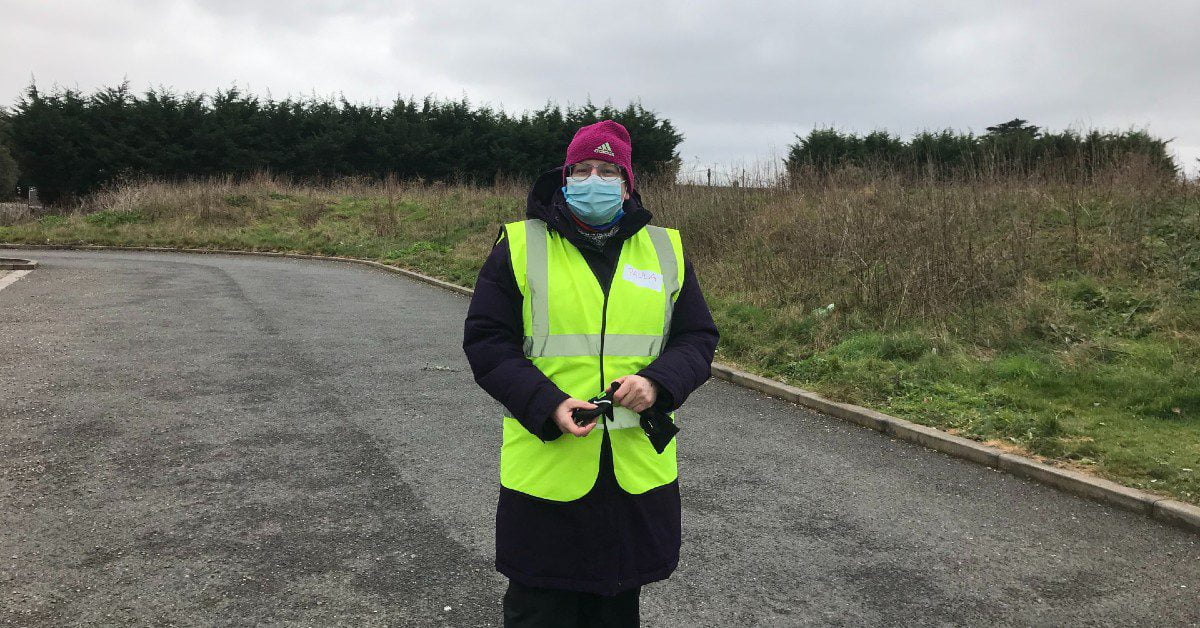
Paula Goldsmith is one of our holiday cottages team members, dealing with customer queries and accounts. She has worked for Durrants since 2018 and is also a member of Southwold Town Council and a well-loved member of the local community. An already busy-bee but not happy to let an opportunity to help slip her by, Paula has recently been volunteering two days a week at Sole Bay Health Centre in Reydon to assist the smooth operation of the Covid-19 vaccination programme.

“It’s a really varied role and I’m part of a lovely team. Each shift I could be doing anything from directing traffic and checking-in patients to reassuring people about the vaccination or making sure they’re comfortable and don’t have a ‘wobble’ after having the jab.”

We’re really proud of Paula and her fellow volunteers – keep up the good work!

Leah Smith, making new lives matter

As marketing manager for Durrants Holiday Cottages and a new first-time-mum in 2019, it would be fair to say that Leah has her hands full, but she has also found time to play a huge role for Baby Basics, a community based group who work with midwives, health visitors and other professionals to provide support to families who are unable to provide for their new arrival. Each family is gifted a moses basket full of baby essentials such as toiletries, newborn clothing, blankets, muslin cloths and other essential items.

“After becoming a first time Mum in 2019 I was stunned at how much you need to prepare for your new arrival, and it made me wonder how families in need across the country were able to obtain the basics, let alone higher priced essential items such as prams and car seats.

Part of my role within the organisation is to seek fundraising opportunities. In 2020 we sought a permanent ‘baby bank’ trolley in our local Tesco foodstore, set up regular donations from our local supermarkets and we also run an annual Christmas appeal where we ask members of the public to donate Christmas presents for the families we have supported throughout the year.”

Teresa Walsh, the festive spirit of Halesworth

Having worked for Durrants for 24 years, Teresa really is a part of the furniture – the team simply wouldn’t be the same without her. The same applies for the Christmas celebrations every year in Halesworth. For the last 6 years Teresa has been chair of Halesworth Events Management, or HEM for short, which is a group of volunteers who work tirelessly to organise and fund the Halesworth Christmas Lights.

“Christmas in Halesworth is so magical. Every November we celebrate with a parade including a band and Santa’s sleigh, followed by the big celebrity switch on. After that, there’s live music and dancing in the market place plus Santa’s Grotto at the church. Thousands of people come to the town to enjoy the festive celebrations. It’s an event that is enjoyed by not just the young but also the young at heart as many elderly residents look forward to attending this event every year.”

It’s a year-round job for Teresa, who together with her fellow volunteers, organises quizzes, fashion shows, and other fundraising activities, not to mention the risk assessments and licences that are required to pull such a tremendous event together.

We can’t thank our Durrants volunteers enough for their contribution to the community in which we do business. They really are shining stars. Thank you!

Posted on

Durrants announces £20k funding for local charities

Baby Basics and Durrants Charitable Foundation

Leading Norfolk and Suffolk property and consultancy firm Durrants is delighted to announce new funding of £20,000 available for local charities and community projects. Grants of up to £2,000 are available and applications must be submitted by 31st March 2021.

George Durrant & Sons Limited provides a range of agency, professional and consultancy services across the residential, commercial and agricultural property sectors and has played its part in the community since it was established back in 1853. Over the years Durrants has supported many local events and community projects including the work of East Anglian Air Ambulance; YANA, a rural mental health charity and Clinks Care Farm near Beccles, which provides disadvantaged people the opportunities to work and learn a variety of agricultural roles including working with livestock, carpentry, market gardening and more.

The Durrants Charitable Foundation has been set up to formalise the company’s support for local community and charity projects and this year a fund of £20,000 is available with applications for grants of up to £2,000 being accepted until 31st March 2021.

Dominic Parravani, Managing Director for Durrants said, “Being an active part of the community in which we do business is very important to us, and in these unprecedented times, it is more important than ever to show our support.

The Foundation aims to support projects in the areas of Beccles, Diss, Halesworth, Harleston and Southwold, where we have offices. Perhaps a local school needs devices for remote learning, a sports club needs new equipment, or a new community event needs financial support getting off the ground. These are all examples we would consider supporting through the Foundation.”

A recent beneficiary of Durrants funding is Baby Basics, a Lowestoft based organisation that works with midwives, health visitors and other professionals to provide moses baskets and starter kits to vulnerable families in Lowestoft and the surrounding area. Leah Smith, Durrants employee and volunteer for Baby Basics commented, “We are delighted to have received the support of Durrants. This will make such a big difference to many vulnerable families in the area.”

Full details of how to apply for funding and terms and conditions are available here.

Posted on

Exodus

Demand for Suffolk countryside properties increases due to covid

Managing Director and Head of Residential Sales for Durrants, Dominic Parravani looks ahead to a busy spring in the property market.

In the wake of Covid 19 the UK experienced an exodus. This was the evacuation of urban dwellers to the land of milk and honey – the countryside.

The flight from city lockdown to a pastoral idyll was and is a compelling idea, especially when working practices have changed so much in the light of the pandemic.

But will this movement last? In a post-vaccination world there may be a gradual drifting back to the pleasures and convenience of big town or city life. But for many the change in lifestyle is now locked in. Roots have been put down in earth rather than concrete.

Despite the looming end to the stamp duty holiday deadline on March 31st there is little or no let up in demand. Lockdown 3 has brought even more buyers to the market and house price rises have reflected this.

Many exodus purchases have been a straight swap – town for country. But a good proportion of transactions have been for holiday homes with a view to longer-term permanent living through career change, altered lifestyle or retirement. This is clever thinking as any potential rises in capital gains tax could favour greater investment in principal residences, rather than second homes.

Covid19 has affected the property market in ways that we never expected, and we imagine it will continue to do so for quite a while. Unwelcome, horrifying and shattering as the disease is, for many buyers and sellers it has also unexpectedly proved to be a profound catalyst for change. If Covid19 fades in its potency into the spring and summer, we think those changes will continue to grow and become wonderful new opportunities. For many, the land of milk and honey beckons.

Posted on

The increased demand for rural and coastal properties explained

rural property sales in norfolk and suffolk

Since the initial lockdown in March, the demand for rural properties has increased massively due to changing property priorities and working habits.

Rightmove’s yearly review for 2020 shows that both coastal and rural areas were favoured by buyers as many moved away from central locations.

The top 10 best selling areas in the UK last year were dominated by idyllic locations, such as Devon, Surrey and Somerset.

Similarly, properties with larger living areas, dining rooms and gardens all seemed to be the most popular on the market.

With many expecting to be working from home for a while, or even swapping to remote working on a permanent basis, the significance of a central location is no longer as prevalent for buyers and tenants.

According to Rightmove, out of the top ten best selling areas of 2020, seven of those had a population of 10,000 or less, showing that life away from the hustle and bustle of the city was preferred by many during the pandemic.

Specific areas that have seen impressive growth since the outbreak are Wiltshire, Hampshire, Stockbridge, Suffolk and Hertfordshire.

Amongst these, Hertfordshire was the most popular with a 75% increase in sales year-on-year, and no evidence of this slowing down.

Similarly, suburban areas in the north west have seen the biggest price growth this year, with prices rising from £184,299 to £213,706 on average.*

Rightmove’s director of property data, Tim Bannister, said: “this year we’ve seen an uplift in the number of home-movers escaping to the country and we think this trend will continue for now as people show their willingness to make significant life changes.

“The data highlights just how influential the unexpected events of this year have been in shaping the nation’s housing priorities, with many buyers determined to swap city streets for rural and coastal retreats.”

If you’re looking to prioritise green space in your next property we’d love to help you.  Click here to arrange a free property valuation and get expert advice from one of our friendly team.

Posted on

A guide to understanding your property’s value

Understanding your property value

If you are planning to sell or rent your property, then it’s important to get an accurate estimate of how much the property could be worth.

To give you an agent’s perspective of what that involves, we’ve provided some of the key take-away points below.

Market value

Firstly, knowing how much your property is worth is more commonly known as its ‘market value’, which relates to the price a buyer is willing to pay when considering local and national market conditions.

What impacts the value of your property?

The value of your house can be determined by a variety of factors, such as any recent changes to the property or your neighbourhood.

Some of these factors may also include the size, location, amenities, condition and the asking price of similar houses nearby, so it’s always beneficial to talk to a local agent with familiarity selling in your area.

The difference between market value and asking price

Valuing your house accurately is one of the most important parts of the process.

Bringing your home onto the market with an asking price that is too low could mean you receive offers below market value.

Whereas if the asking price is too high, you may not receive any offers at all, causing time delays and market stagnation as the ideal buyers are put off a home that falls outside of their price bracket.

So, whilst it can be tempting to instruct an agent based on who is offering the highest value, the risk of this is that you may need to gradually reduce your price anyway to reflect the property’s actual market value.

How much could your house really be worth?

The best way to see how much your house is worth is through a combination of tried-and-tested
methods.

Over lockdown, it would be advisable to begin by referring to online house price calculators and valuation tools, as these will provide a guide based on Land Registry Data.

However, it’s important to bear in mind that for the most accurate and up-to-date valuation, you should organise time with an agent, as an in-person appraisal will guarantee any recent developments to your home are taken into consideration.

To arrange a free, no obligation valuation of your property, get in touch by completing this simple online form. 

Posted on

Announcing our latest sponsorship (if a little late)

durrants sponsors southwold womens XV

After last weekend’s exciting climax of the Autumn Nations Cup and the recent Government guidance that relaxes Covid restrictions on outdoor contact sports which will allow rugby to return to Southwold Common, we thought now was a good time to make a little announcement.

Having been a supporter of Southwold Rugby for several years, Durrants is proud to sponsor the Southwold Women’s XV.  The deal was sealed several months ago but as with so many things this year, the pandemic put a stop to the game.

The buzz and excitement of rugby has been sorely missed in the town over recent months, but all being well we expect to see contact fixtures return to Southwold Common from 18th December.  We wish the Southwold Women’s XV and all the other Club members the very best with their return to the game.

You can find out more about Southwold Rugby Club and their return to play here.