Posted on

Swings and Roundabouts

Swings and roundabouts

Dominic Parravani of Durrants notices a marked difference between the real world and TV.

As we sit open-mouthed at scenes from Buying London, the latest television property show, we are graphically reminded that houses are subjective. Some viewers will find the homes of the rich and famous a source of awe and fascination, while others will bring the matter of taste very much into question. But in property there is something for everyone.

The type of firm portrayed in the TV show differs from most estate agencies up and down the country. So do the sales team in Buying London: are they to be admired or reviled? One thing is for sure, most of their talk is about themselves, securing the property and then selling it for a hefty commission. But our estate agents know that the most critical component in a property transaction is not the agent or the property but the client.

Estate agency isn’t about flogging units of residence; it is about carefully matching a seller with a buyer and steering a mutually acceptable agreement through choppy waters to a satisfactory conclusion. Estate agency is about moving people by taking the long view. As such it’s about making people happy, not making a quick killing.

Local estate agency is a world apart from the almost fantasy-like glitz and glamour of Buying London, much like a travelling fair is from Disneyland. But all professional estate agents know the actual property world is far more about swings and roundabouts than fantasy.

Posted on

The Perfect Date

the-perfect-date

Dominic Parravani of Durrants finds that finding a great property is a bit like finding a great date.

Like dating, finding the perfect property involves exploring different options until you find the one that suits you best. Sometimes one has to kiss lots of frogs until the right one turns up.  Occasionally though it can be love at first sight.

Viewing a property has many parallels with going on a first date. Whether it’s a date or a home, it’s essential to have a clear idea of each option. A recent survey found that 45% of respondents reported that the top place to find a date was online, and an impossible-to-ignore 93% of UK homebuyers use online channels for their property searches. The similarities don’t stop there: most people put looks and personality at the top of their most important factors when choosing a date or viewing a property.

But appearances can be deceptive. Talented photographers can flatter their subjects. People and properties in the raw can often disappoint. What’s needed is not a just-got-up-from-a-bad-night’s-sleep photo but a going-to-the-ball image. And as you can’t always rely on a photo, an in-the-flesh meeting is essential to decide whether you can go through life with a particular person or property.

One UK property portal is the 12th most popular website overall in Great Britain and is number 176 across the world. With statistics like those it’s clear that showing your property at its very best online is crucial, especially as looks and personality are key decision-making factors. Put simply, for a date or for a home you have to get people swiping right and not left.

Our website, designed with your convenience in mind, makes it easy for suitors to browse a wide range of attractive possibilities for the ideal match. And that means not having to kiss so many frogs.

Posted on

What is Clarkson’s Law, and did Jeremy Clarkson have anything to do with it?

clarksons law

Jasmine Philpott, Durrants Senior Planner and Development Surveyor looks at whether Clarkson’s planning battles have changed agricultural permitted development rights. 

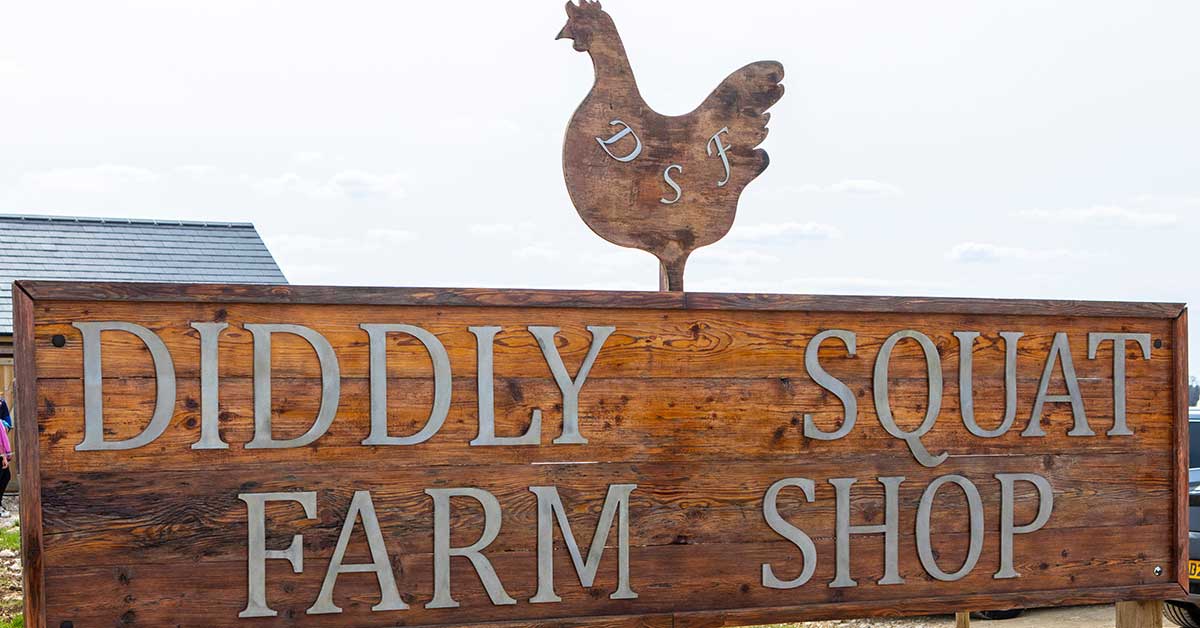
Jeremy Clarkson’s ongoing battle with his local planning authority in his various attempts to diversify Diddly Squat Farm often makes headlines, but recent reports link him to the latest shake-up of agricultural permitted development rights.

So, what are the changes, and did Jeremy Clarkson really influence them?

Changes to Class Q and Class R were announced by government on 30th April, and came into force on 21st May, with a transitional period until 21st May 2025.

Class Q allows for the change of use of buildings from agriculture to dwellinghouses. As of 21st May:

  • There has been an increase in the total number of dwellings from 5 to 10
  • There has been an increase in the total maximum floorspace that can change use, from 865sqm to 1,000sqm
  • A maximum individual dwelling size of 150sqm (previously 465sqm) has been introduced
  • The previous date of March 2013 has been updated to 24th July 2023
  • The barn does not have to be in agricultural use to qualify any more. It can have been used for non-agricultural purposes, or been empty, as long as it was in agricultural use on 24th July 2023.
  • It is now possible to extend a barn via a rear extension, no more than 4m from the rear wall, as long as it is over existing hardstanding (that hardstanding must have been there in July 2023).
  • It is also now possible to protrude by up to 0.2m to allow for windows, doors, roofs, exterior walls, services etc. This is currently not possibly under Class Q.
  • All dwellings must meet National Space Standards

Until 21st May 2025, it is still possible to apply for Class Q under the previous rules. These allowed up to 5 dwellings up to a maximum total of 865sqm, but it was not possible to extend or protrude from the building.

What these changes mean for landowners

The increase in the total number of dwellings that can be created is, on the face of it, positive, and has clearly been introduced to increase rural housing numbers. However, in practice, it is rarely desirable or financially beneficial to divide a large barn into multiple small homes, so we do not foresee many landowners taking advantage of this maximum. Of course, this maximum number (and the total of 1,000sqm) applies to the entire agricultural unit, so it is possible to convert, say, 3 dwellings out of one barn, and then another 7 from a barn elsewhere on the farm.

The ability to extend and protrude is very positive. This was an unhelpful and impractical element of the previous legislation, and will facilitate sensible changes to the structure of the barn to create more comfortable homes.

The relaxation of the need for a building to still be in agricultural use is positive, however, it is important to note that the building must still have been in agricultural use on or before 24th July 2023. A barn cannot have changed to another use – i.e. it must either be in agricultural use, or be empty. In reality, this is how Class Q has been interpreted and applied for several years now in any case, so whilst this change appears significant, it is not.

How did this come about?

I wrote about a consultation on changes to the GPDO back in August 2023. Almost all of the changes to Class Q mooted in that consultation were adopted in the final version, with only the expansion of Class Q to incorporate equestrian and forestry buildings ultimately abandoned.

What is the connection to Jeremy Clarkson?

It is difficult to know whether Jeremy lobbied government, but it is entirely possible that he did. Clarkson’s main challenges at Diddly Squat have been in relation to his farm shop and restaurant. These particular issues are more relevant to the changes to Class R, which were brought in at the same time as those to Class Q and are summarised below.

Class R allows the change of agricultural buildings to a flexible commercial use. This includes:

  • Class B2 (general industrial)
  • Class B8 (Storage or distribution)
  • C1 (hotels)
  • Class E (commercial, business or service)
  • Class F.2(c) (outdoor sport or recreation)
  • Agricultural training

This does mean that it is now possible to convert a barn (for example) to a restaurant or shop, without needing planning permission.

However, it is important to note that a change of use under permitted development does not mean that the work can go ahead without applying to the Council first. This is a common misunderstanding. Almost all types of permitted development still require prior approval, which is similar to a planning application, but with a slightly reduced scope in terms of the elements that are valid considerations by the local authority.

If the Class R change of use is for a building of less than 150sqm, the prior approval application will be minimal, but if it is larger than this, contamination, flooding, noise and highways impacts must all be considered.

In summary, the changes to Class Q and Class R give more opportunities to landowners, particularly in terms of farm diversification. Clarkson’s café conversion would not need planning permission, and only a minimal prior approval application (providing it is less than 150sqm in size) if it were built today. However, permitted development does still come with numerous conditions, so it is important to proceed with caution and to ensure you are very confident that you meet all the criteria – and if in doubt, call us!

Jasmine.philpott@durrants.com

07710 674301

This article was published on 29th May 2024 in the Diss Express

Posted on

Growing financial risk for ‘go-it-alone’ landlords

Growing financial risk for 'go-it-alone' landlords

Housing minister Jacob Young recently scotched rumours that the property portal proposed in the Renters (Reform) Bill would remove the need for selective local authority licensing. Instead, pending a future review of such schemes, they will continue to apply – even after the passing of the Bill – leaving non-compliant landlords and managing agents at increased financial risk.

Selective licences were introduced as part of the 2004 Housing Act and implemented two years later. They were intended to improve the quality of homes in the private rented sector.

The minister’s statement said: “The portal will be a resource for local authorities and to help landlords understand their legal obligations, while selective licensing gives councils powers to licence properties to address issues such as poor housing and crime. There will be overlap with data. We don’t want to see selective licensing abolished but want to ensure the processes are streamlined – that’s why we’re committing to a review of selective licensing and HMOs.”

Assuming the Renters (Reform) Bill is passed, this could mean both the portal and selective licensing will continue, and local authorities will remain responsible for enforcement.

In such a scenario, landlords face an increasing financial risk through non-compliance either through fines or rent repayment orders or both.

This increased burden of regulation – whether that be in finding suitable tenants or property management – puts the onus on landlords not just to remain on the right side of the law but to keep themselves updated on the changes.

According to Propertymark, there are 168 pieces of legislation facing landlords in England every day they are in business, and the chances are this number will only increase in the months and years to come.

There has never been a more necessary time for landlords to secure the services of a professional letting agent to look after the day-to-day running of their property portfolios.

Posted on

What happens during the process of selling a house?

Durrants what happens during the process of a house sale.

George Berry, Residential Area Manager of Durrants, explains what happens during the process of a house sale. This article first appeared in the Diss Express.

What happens during a house sale?

I often meet vendors who have not sold a property for a number of years who ask, “It has been a long time since we last moved, can you talk us through the process?

There are two areas to cover the marketing process and the sales process. Each are different and it is important to know the difference and how to avoid possible pitfalls that may arise.

The marketing process happens first, but there’s a good reason why I want to mention the sales process at the start. Following successful viewings, you should receive offers on your property. Whether those offers are acceptable or not, your agent should put each of them in writing to you within 24 hours of receipt until hopefully an offer is acceptable.

Appoint a solicitor early

At that point a memorandum of sale will be issued to both vendor and buyer plus their two respective solicitors. Many vendors wait until a sale is agreed before appointing a solicitor. This is the first pitfall in my view. I would  advise appointing a solicitor as soon as the property goes on the market and ask them to send over all forms.               

For example, there may be works you have done or other supporting documents that will be required. If you are aware of these at the start of the process it gives you more time to collate relevant information. 

This leads on to the next pitfall. As part of the sales process the buyers’ solicitor will ask when the electrics were last tested, when the boiler was last serviced and if there is private drainage, when was it emptied?

Having these questions early means you can get the various points actioned and be in a position to supply the necessary paperwork.

Private drainage often crops up as the laws changed in 2015 with regard to water being discharged from septic tanks into a water course. Many properties in rural areas have private drainage and often only at the point of selling does the question get raised. Because of the change in the rules many vendors have discovered their drainage system is non-compliant. 

Firstly, it’s worth checking whether the existing system is compliant with either the company that empties the tank or the Environment Agency. If it complies then a letter to confirm this is sufficient to go to the solicitor. If it is noncompliant then a new treatment plant will be required. You can either install this yourself prior to marketing the property or discount your asking price to factor in that your buyer will have to install it.

Discover any issues as soon as possible

The more you are aware of at the start of the process and can potentially address or alternatively be transparent about with buyers, the smoother the sales process will be.

My advice in dealing with this at the start of the marketing process means it will reduce the risk of a sale falling through once agreed. The largest reason for sales falling through is issues coming to light during the sales process that could potentially have been avoided if  dealt with earlier.   

The marketing process is the start of the working relationship with your appointed agent up to the point of agreeing a sale. This involves photography, floorplans and then brochure production. Once approved it is put on the internet portals. 

Viewings then start and you may choose to accompany viewings or your agent may do this.Your agent will then give you viewing feedback. There should be a lot of contact with your agent during this time,

We as agents work FOR you as the client but we also work WITH you and it should absolutely become a working partnership. If that partnership is formed during this time, it will equally in turn lead to a far smoother sales process.

Catch up with the latest property news in George’s Diss Express column next month.

Posted on

East Suffolk supports replacing Class Q barns with new dwellings in new SPD

spd

East Suffolk Council adopted their Rural Development Supplementary Planning Document (SPD) at the end of April. The SPD sits alongside the main local plan policies to inform and guide development.

As a reminder, Class Q allows the change of use of agricultural buildings to dwellings, and is very strict in that the majority of the structure must be utilised in the conversion. Only very limited demolition is permitted to facilitate the development.

One of the most significant changes outlined in the SPD is the Council’s endorsement of the demolition of barns benefitting from Class Q approvals in order to replace them with entirely new dwellings. Until recently, there was no policy-compliant way of achieving this, leaving owners to convert barns which are oftentimes too large, difficult to convert and not particularly attractive. Though Durrants nearly always achieve an improved design through a follow-up full planning application, the SPD means that owners could move away from utilising the existing building altogether.

There are of course conditions to this approach. The Class Q must be a genuine fallback position – i.e. it must have a realistic prospect of being completed within the three years, with all pre-commencement conditions discharged. The replacement dwelling must also represent a significant improvement on what would have been achievable under the Class Q. This is in terms of design quality and environmental standards, as well as its suitability in terms of the setting and character of the area. The replacement dwelling must be on the same footprint as the original barn, unless there is a well justified reason for a dwelling in an ‘alternative, close location.’

This is an exciting new avenue for owners of barns in East Suffolk, and Durrants are already helping some existing clients to explore this route for their barns. Please do not hesitate to get in touch with our Senior Planner if you have a barn (with or without Class Q) that could benefit from these changes.

Jasmine Philpott

07710 674301

Jasmine.philpott@durrants.com

Posted on

Chasing Shadows

Durrants-Chasing-Shadows-1200x628

Dominic Parravani of Durrants enjoys some spring sunshine and considers whether this is an excellent time to buy and sell property.

There was a time when the spring months were the perfect time to put one’s property on the market. This was a result of some charmingly simple reasons. The trees are newly in leaf, and everything seems fresh, new and exciting; the days are warmer and longer, and buyers often like to move in by the summer holidays or before the start of a new school year. Life is full of hope. Whilst these traditional reasons for selling in spring still hold true,
there are now many additional and sometimes less prosaic reasons to trigger a sale and purchase. So, why could an owner benefit by selling this spring rather than later in the year?
 
We live in an uncertain world. The Middle East, Ukraine, global warming, not to mention 49% of the world’s population voting this year in 64 national elections – possibly changing things globally for years to come. Nowadays, waiting for normalisation seems a bit like chasing shadows. Whichever way you cut it, uncertainty surrounds us, and the property market, like any other, hates uncertainty.
 
So, are the spring months in 2024 an excellent time to buy and sell? They are a brilliant time to buy and sell. First, there are all the traditional reasons. But now we have a falling cost of living and mortgage rates which will not only attract more people to the market but also make house ownership more affordable. This affordability aspect should instil a sense of optimism in potential buyers and sellers.
 
In property, it is usually best to work with current conditions than kick the can down the road hoping for something better – or chasing shadows.

Posted on

Time to Move

Durrants-Time-To-Move

Dominic Parravani of Durrants looks at the property market this spring, and suggests if you want to move there is no time like the present.

Imagine the property market as a clock face. Twelve o’clock is a rampant buyers’ market with lots of property available and buyers playing hardball with offers. Six o’clock is a sellers’ market, with prices rising quickly and purchasers panic buying, often going straight in at asking prices to secure properties. These are times in the market when things are most uncomfortable and precarious. These markets generate gazumping or gazundering, practices that often do more harm than good and are strenuously discouraged by experienced estate agents.

Between these market extremes, at three and nine on our clock, is balance. Buyers have more time to make their choices and try reasonable offers. With more property on the market, sellers have more competition and have to price reasonably to attract buyers. More than that, their homes should be in the best possible structural and tastefully decorative condition. Clutter will have to go.

The market this year feels more in balance than it has been for a long time, a rare period when buying and selling property is relatively calmer, easier and less of a lottery. For those thinking of moving this spring, embrace the opportunity that falling interest rates bring more buyers. Sadly, this time of equilibrium will pass. It is the way of the property market. Our advice is if you want to move, now is a wonderfully opportune time to do so.


Posted on

New planning use class for short-term lets to come into force

planning use class

Following a consultation last summer, the Department for Levelling Up, Housing and Communities has confirmed that a new planning use class will come into effect this summer for short-term lets.

All land and buildings in England fall into a planning use class, which determines how they can be used and developed. Under the existing planning use class system, holiday homes fall into the same category as permanent dwellings; C3. Whilst this has its advantages, it means that planning applications for new holiday homes are often considered against the same criteria as a new permanent dwelling. It also makes it difficult for authorities to control or enforce against permanent dwellings being used as holiday lets in areas where it is causing problems.

The changes would see a new use class, C5 introduced, described as ‘use of a dwellinghouse that is not a sole or main residence for temporary sleeping accommodation for the purpose of holiday, leisure, recreation, business or other travel’.

Properties can be let for up to 90 nights per year without changing use from C3 to C5. The changes will not apply to properties already in such use.

A new permitted change of use will be introduced alongside the new use class, allowing permanent dwellings to change to short-term lets and vice versa. This would enable local authorities to remove this right in areas where a concentration of holiday homes may be an issue via an Article 4 direction.

Of course, these changes will likely mean more regulation of holiday lets (e.g. health and safety) which will be a burden for landlords. However, they are a positive and sensible way to distinguish between permanent and temporary residential use and should be helpful for some homeowners, and empowering for communities. Those who sporadically rent their homes will not be affected.

Those wishing to use their properties as holiday lets all year round will have more clarity on what criteria need to be met in order for their endeavour to be acceptable from a planning point of view, protecting them against otherwise avoidable objections from neighbours etc.

Posted on

Mid Suffolk Call for Sites underway

call for sites

Famed for previously having one of the oldest local plans in the country (1998), Babergh Mid Suffolk recently adopted Part 1 of their Joint Local Plan and are starting to prepare Part 2, which includes allocating land for housing.

Their Call for Sites consultation is now underway, and closes at 1pm on Friday 2nd February. The Call for Sites is the Council’s starting point for reviewing potential residential development sites in the area, with a view to allocating sites in the final version of the plan.

If you own land that you think has potential for residential development, do not hesitate to contact our Senior Planner, Jasmine Philpott, who can put your site forward in the consultation.

The Call for Sites is the first step in preparing the Part 2 plan, which is due for adoption in 2026.

Please contact Jasmine via email at Jasmine.Philpott@durrants.com or call 07710 674301 to discuss your options further.

Posted on

Out of the mouths of babes

out of the mouths of babes

Dominic Parravani of Durrants looks forward to a resurgent property market in the New Year.

When a building goes up in flames, the media reports a fire: what it doesn’t do is report the smoke beforehand. Similarly, no one at the moment is headlining the marked increase in property activity witnessed by estate agents in the lead-up to Christmas.

In fact, far from a seasonal slowdown, there were more viewings in each month of November and December than in September.

There is no smoke without fire, and with this pickup in activity, declining inflation and the likelihood of some falling mortgage interest rates through 2024, we can look forward to an improving property market in the coming months.

No doubt also, both Conservative and Labour parties will try to lure the electorate with new housing policies designed to stimulate the property market further.

Nor is this optimism based solely on the above. 2023 saw increased interest from first-time buyers.

This trend should continue as we emerge into a more buoyant market that also stimulates second movers, thus making more first-time buyer properties available. This would be the long-wished-for virtuous circle.

Most baby boomers and millennials consider property as part-home and part-investment vehicle. For them property has been the gift that has kept on giving.

But let’s look at the property market from the eyes of twenty-year-olds. For them the last decade has been challenging. This group, often priced out of home ownership and suffering increasingly high rents, says they aren’t looking for investment opportunities they’re simply looking for somewhere to lay their heads.

Out of the mouths of babes, Generation Z reminds us that first and foremost a home is to live in.

Nor should we forget the role the older generation is playing in this residential resurgence.

Baby Boomers might not be moving much themselves at the moment but in 2023 the Bank of Mum and Dad and the Bank of Grandma and Grandpa invested over £8 billion in property: that’s not personal investment but an investment in the futures of their children and grandchildren.

2024 should be a year of looking forward and growing opportunity. Above all it should be a time when property is purchased, but mostly to live in than to trade in. Now that should give the media a blazingly good headline.