Posted on

Durrants overturns planning refusal for rural workers dwelling

planning permission

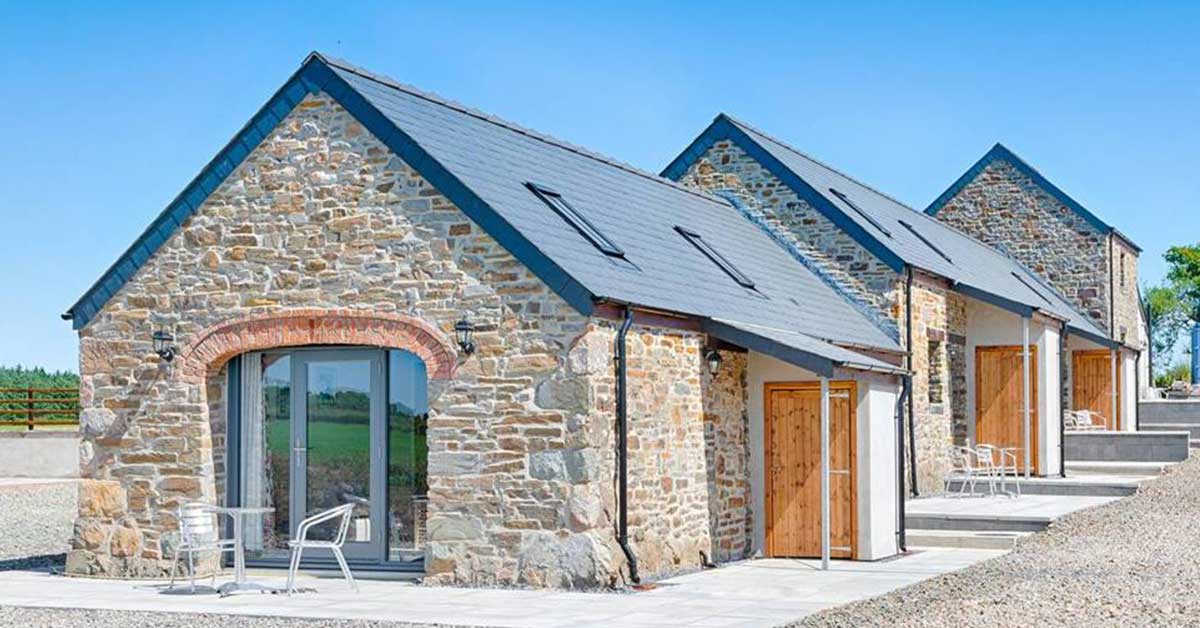
The Durrants team are celebrating an excellent win on behalf of their client this week after securing full planning permission for a rural workers dwelling in Rumburgh, East Suffolk.

The application was made in order to allow an engineering company to continue to operate their agricultural machinery maintenance business by living on site. Durrants Building Consultancy’s in-house architects provided the supporting plans and the planning team produced the supporting planning documentation, including the Planning, Design and Access Statement.

Policy WLP8.11 of the Waveney Local Plan sets a high threshold to allow new homes in the countryside for rural workers. Applications must demonstrate an essential functional need which cannot be met by other nearby housing. The question of functional need is often, as in this case, mistakenly interpreted as applying to maintaining the welfare of livestock, excluding agricultural support services. However, Durrants outlined in the planning statement and committee speech that this is a misconception, and that both local and national policy support housing for anyone who needs to live close to their place of work in the countryside, regardless of the nature of that work. In this case the company provides agricultural machinery maintenance services to 400 clients across East Anglia.

planning permission plans

Durrants Building Consultancy set out a clear case for approval in the planning submission, including site security, business efficiency (particularly relating to a 24/7 call-out service) and sustainability. The application received letters of support from local residents, business owners, and the support of the parish council and ward members. The application was recommended for refusal by the case officer on the basis that no functional need had been demonstrated.

However, thanks to successful lobbying, the application was referred to full planning committee, where it was subject to a thorough debate by members and ultimately approved. One of the most compelling reasons for approval which emerged during the debate was site security. Members recognised the rise in rural crime and the value of living on site in preventing theft. Secondary to this was the crucial role that the applicant’s business plays in the local agricultural sector, and the importance that planning decisions play in supporting rural farming communities.

We are thrilled for our client, and pleased that members were able to see that rural workers policies are designed to be permissive in appropriate circumstances, not preventative.

Rural workers dwellings can be contentious, but with the right team of experts and a strategic approach, it is possible to secure a home close to your place of work in the countryside, and we would encourage anyone who is considering applying to get in touch with our team to discuss your ambitions.

Posted on

CLA East: A zero-carbon performing home

cla east zero carbon

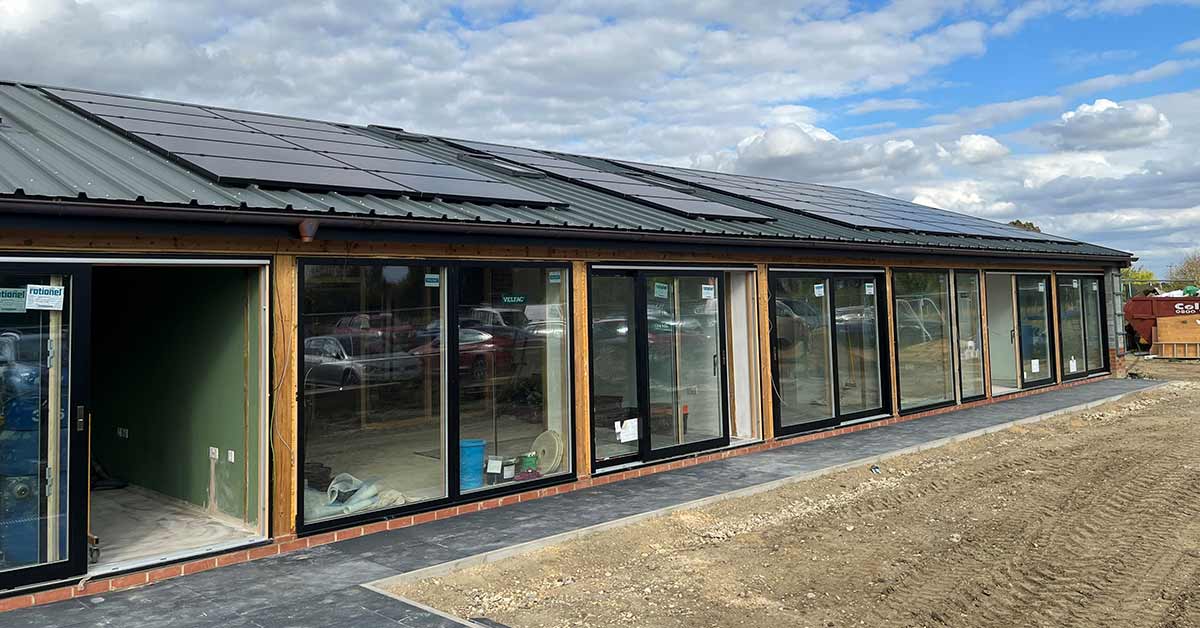
Durrants were recently invited to attend an event by CLA East to show how a 25 year old chicken shed was converted to a zero-carbon home. Nick Woolley and his wife Saffy shared with Durrants Principal Planner, Jonny Rankin, the challenges and successes they faced during the conversion process.

Planning permission initially came to life via a Class Q Prior Approval, which will be very familiar to Durrants clients. Class Q’s are a Building Consultancy mainstay, with several on the books at any one time.

The chicken shed in question benefitted from a southern elevation allowing for passive solar gain and a large bank of solar panels on the south-facing roof slope.

Having attended events at Woolley’s old HQ in Freckenham, I was aware of Nick’s advocacy for the Hockerton Housing project and the building principles therein. Having retrofitted the previous Old Rectory buildings, in speaking with Nick, I could sense the excitement at the opportunity to start from the ground up – literally – with the chicken shed. Some features we had the pleasure to view included:

  1. 300mm thick floor concrete at 300mm, giving an overall ‘U’ value of 0.1*;
  2. 300mm of floor to ceiling wall insulation, also giving an overall ‘U’ value of 0.1;
  3. Triple glazed windows;
  4. Epoxy resin wall ties (not steel) preventing thermal losses; and
  5. 440mm of insulation under roofing sheets giving a ‘U’ value of 0.055.

Onsite generation is key to the success of the zero-carbon performing home and we were abvle to view the 75 solar panels (27kWh maximum energy production) and the 3 Tesla Powerwall batteries.

All heating is solar powered, delivered by underfloor heating – only required in colder months absence solar gain.

Mechanical Ventilation and Heat Recovery (MHVR) is something we are also employing for clients on some of our current planning applications and builds and we were able to view the Vent-Axia unit chosen by Nick and Saffy. The MHVR unit changes air throughout the building roughly every four hours, exchanging ‘old’ air whilst retaining up to 80% of the heat, heating the incoming air.

Rain-water harvesting (from roof space and guttering) is collected in a 6000 litre underground storage tank. The water is then filtered and fed back into domestic use. Hot water is provide by a 450 litre, highly insulated tank, reducing the energy required to heat the water by as much as 43%.

Smart-operating Velux windows open in reaction to extreme temperatures and also close when it rains.

Particularly topical for some of our clients in this time of Nutrient Neutrality is the private sewage treatment works employed. Sewage is treated by a double, in-tandem septic tank system – which alone would treat effluent sufficiently. Thereafter, however, a reedbed filtration pond (complete with Water Voles and Frogs) removes the remaining nutrients ‘standard’ septic tanks and public sewage treatment works are currently struggling with. An important technological solution for many of our clients.

We continue to engage with the CLA and other partners to ensure we are best able to support our clients, deploy the best technologies and offer the best service possible through Durrants Building Consultancy.

The friendly team at Durrants Building Consultancy are always happy to discuss your plans and help you get your project off the ground. There is more information about our services here, but please get in touch with our Building Consultancy team to find out more on 01379 646603.

* Thermal transmittance, also known as U-value, is the rate of transfer of heat through a structure (which can be a single material or a composite), divided by the difference in temperature across that structure. The units of measurement are W/m²K. The better-insulated a structure is, the lower the U-value will be.

Posted on

Durrants at Henham Steam Rally this weekend

henham steam rally

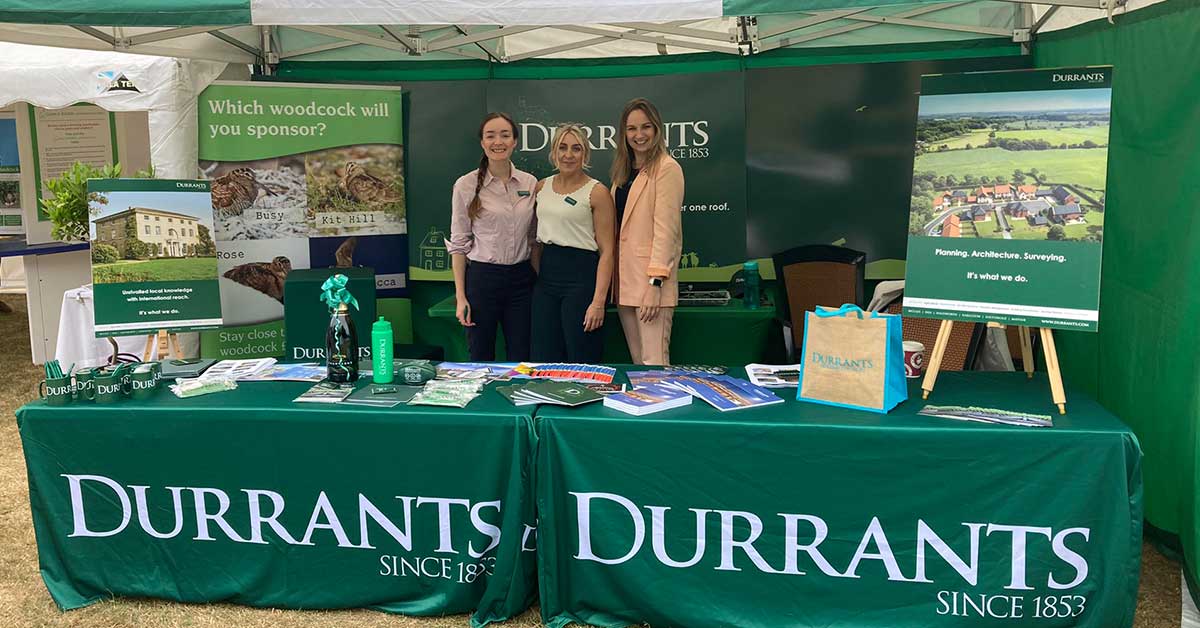
The Durrants team will be out in force at the ever-popular Grand Henham Steam Rally near Southwold this weekend.

It’s the 46th running of the event which features family entertainment coupled with displays of steam power and other vintage vehicles and machinery. There’s over 1000 exhibits and working demonstrations – and there’s even a chance to steer a steam engine yourself!

Durrants will have a stand at the Rally on both Saturday and Sunday where you can meet members of our team and find out about all the services we provide from our Southwold office.

We look forward to seeing you there if you’re coming along. Gates at Henham Park are open from 10am to 6pm on both days.

Posted on

Hot box

Property search in Norfolk

Dominic Parravani of Durrants looks at the human side of buying and selling a home.

In the days before technology invaded the estate agency industry – flooding it with helpful and not so helpful ‘proptech’ – estate agents kept buyers’ details written on index cards that were stored in plastic boxes. These were called hot boxes in the trade and all estate agents had them.

Depending on how long buyers had been looking for a property, each card bore the scars of persistent scrutiny and revision. The cards told the stories of individuals or families. Notated were names, contact details, price range information, aspirations, desires, and even dreams. The longer the search, the fuller, more dog-eared and coffee-stained the cards became until they formed part of their subjects’ stories reflecting the struggles to make dreams come true.

Why so much detail on the cards?  Because how on earth can you find what someone truly wants in a home unless you’ve asked them and understood their answer?

Nowadays the computer has long overtaken the hot box. In some ways it’s an efficient change. But in other ways it depersonalises the process. You can’t get much more personal than a home and its occupants. A hot box was a list of human beings being human and looking for their safe place.

Strokes on a keyboard rather than scribbled notes have replaced the hot box – the lowest of low tech. But all is not lost. Because the best estate agents still have hot boxes, it’s just that these days they keep them in their heads. They haven’t needed them much over the past few years. But now they are being pressed back into service as the market changes in favour of buyers.

So, when you’re looking for someone to sell your home check out several agents. Find out what they think your property is worth and why. But also discover if their head is a hot box. Ask who’s buying, what they might be able to pay, and why they might want your house. This knowledge is basic estate agency. If someone has to use a computer to match home with buyer they’re in the wrong job, because it still needs a human to understand what another human wants and why.

Durrants would be delighted to provide a free market valuation of your property. To find out what makes Durrants different book a free valuation today.

Posted on

Durrants submits representations to East Suffolk rural housing SPD

SPD

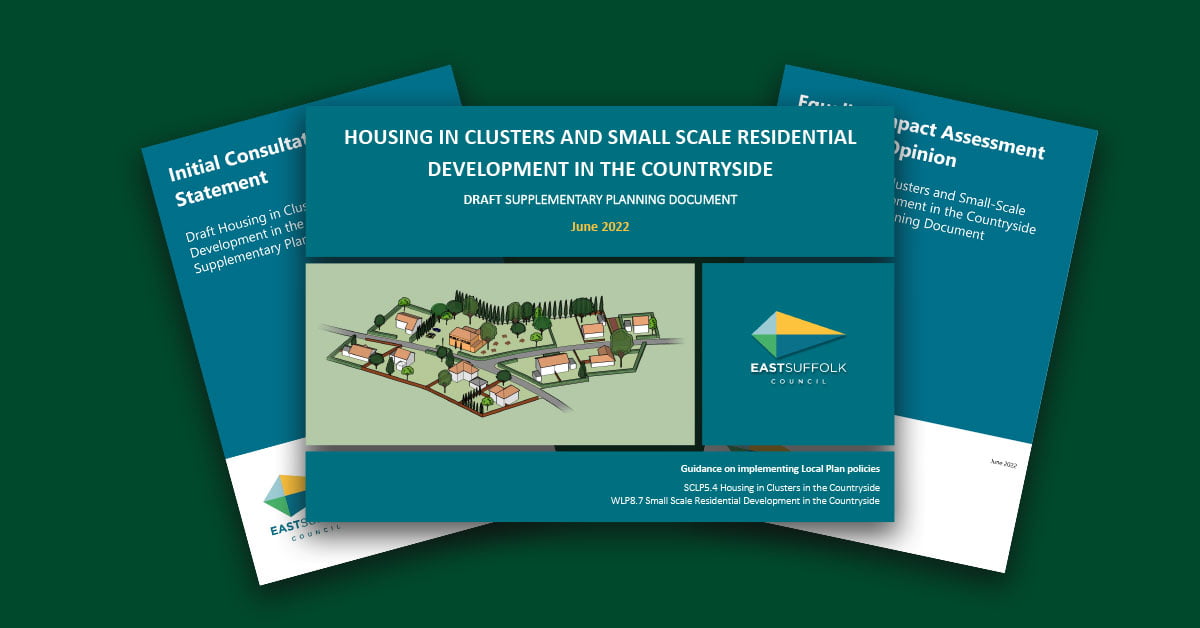
The consultation period for the ‘Housing in Clusters and Small Scale Residential Development in the Countryside Supplementary Planning Document’ (SPD) closed on Friday 5thAugust.

The document seeks to provide clarity on the interpretation of the two relevant policies relating to housing in the countryside (i.e. outside of settlement boundaries, but within groups of other dwellings) – SCLP5.4 and WLP8.7. One of the main issues the Council has sought to address in the SPD is the definition of a ‘cluster’ or ‘settlement in the countryside’. Both policies allow for ‘infill’ development in such settlements, i.e. filling in obvious gaps in a continuous built up area.

Despite the local plans both being recently adopted, officer interpretation of the policies has been inconsistent, leading to some unfair decisions for applicants. Durrants represent numerous clients whose applications have been both approved and refused against these policies. Our letter to the Council highlighted some of the inconsistencies in their previous application of policy, and most importantly, some of areas in which the SPD could fail to avoid such issues in the future. These include the acceptable size and nature of a ‘gap’, what constitutes ‘continuous built up frontage’ and how development on one vs two sides of the road is treated. 

It is our view that the SPD in its current form will only add to the existing confusion, and that the preferable solution is for officers to decide applications in accordance with SCLP5.4 and WLP8.7, as these policies are both very clear and pro-development.

We have summarised the points made in our representations here and would encourage you to take a look at the SPD online.

  • Neither the SPD nor the local plans contain any policies allowing settlements with development boundaries to grow – i.e. there is only allowance for infilling of gaps
  • The definition of a ‘gap’ is still unclear. It appears that infilling a gap containing a garden or farm access is acceptable, but containing a ‘large’ field is not. This needs to be clarified and, importantly, justified.
  • Confusion over ‘development on both sides’ as per the policy wording, which is contradicted by the diagrams in the SPD.
  • No position over whether planning approved developments count towards the cluster. We argued in our letter that they absolutely should.
  • We closed by drawing attention to a recent appeal decision on a house in the countryside, which East Suffolk lost due to their incorrect interpretation of their own policy.

No timescale has been given for the next phase of the consultation process, but Durrants will continue to engage with the process on behalf of our clients. Please do get in touch if you have a potential site that could be captured by these changes.

Jasmine Philpott, Planner

Posted on

Government announces intervention in Nutrient Neutrality challenge

nutrient neutrality challenge

On 20th July, the government announced that the Levelling Up Bill (see our article on this here) will be amended to place a new legal duty on water companies to upgrade treatment works by 2030 in an attempt to reduce water pollution.

Alongside this, Natural England are to introduce a Nutrient Mitigation Scheme, which will see the body develop woodland and wetland areas to offset nutrient pollution. Developers can then by nutrient credits to offset the impact of their proposals.

Though initial advice suggested the scheme would be in place by the autumn, it is now believed that this is in fact when Natural England will begin tendering for the new schemes.

The good news is that SME developers will be prioritised, and developers are still encouraged to provide their own mitigation solutions, with a commitment that Natural England will support, not hinder, such proposals.

This is a very positive step and a sign of swift action from the government. We are still awaiting an announcement from our local councils as to whether they plan to continue with the strategy they outlined in June (see our article on this here).

Posted on

One for the Road

one for the road

Dominic Parravani of Durrants looks at a new property market in the wake of the incomparable past two years.

The thing with changing property markets is that eventually we adapt to each manifestation. Changing markets are a bit like a pandemic. First they are a surprise, next, sadly, some people are harmed by the new normal, and then we learn how to handle the threat.
 
Then, just when we begin to get comfy, something happens and we have to learn all over again in a new market. This is where we are now.
 
Property market watchers, looking for signs that the post pandemic property party is over, have been on high alert for some time. But they don’t have to watch too closely as all the signs are there for anyone to see. The days of putting a property on the market at almost any price, and then exceeding that figure in a market awash with cash buyers desperate to move, are over. We may never see their like again – or, at least, not for decades. Today’s buyers are a new breed. Rising mortgage interest rates, the increasing cost of living and an uncertain and often unstable world have led to understandable caution.
 
So with what sort of new market must we become familiar? There are some interesting patterns emerging. It is becoming more of a buyers’ market. There will be a wider choice for buyers, who will feel less pressured to make their final choices. Sellers will have to become used to delay and uncertainty.
 
How often have we heard that a property’s three most essential things are location, location, location? Well in this new market those things will become price, price, price. In a market with greater choice attracting a buyer becomes more challenging. There are two ways to overcome this: correct pricing and making your home as buyer-friendly as possible – clean, tidy, decluttered, sweet-smelling and great-looking from the kerb.
 
Oh, and there is another way to succeed in selling: make sure you have an experienced estate agent who understands how to adapt to changing times and markets.
 
Finally, sellers shouldn’t despair. The post-pandemic party may be essentially over, but for sellers with a great estate agent, good housekeeping and accurate pricing there is still time for one for the road.

Posted on

Introducing Gabrielle Wones

gabrielle wones

Gabrielle Wones has recently joined Durrants as Assistant Manager in our Halesworth branch.

Gabi entered estate agency after a career change and has worked successfully at a senior level for a number of corporate and independent local estate agents before joining the team at Durrants in May this year.

She said: “I love piecing the puzzle together for someone who is making a move. I love the fact that people who are moving all have different circumstances as to why they are moving, whether it’s a new start or a new baby, and adapting to their requirements.”

Halesworth is very much a growth area for Durrants right now. Gabi says the area has so much to offer: “Halesworth is a lovely area – so close to the coast with a really good community and plenty going on. Character properties are particularly popular at the moment and we are seeing demand for holiday cottages in the area.

“Property in and around Halesworth is more affordable than places such as Southwold for those who would like a base close to the coast, which is only a 15 minute drive away. “

Gabi is looking to maintain Durrants well-known reputation for excellent customer service across all our branches. “I pride myself in the customer service we offer to clients,” she says, “…and we try to hold their hands through the process, making it as stress-free as possible.”

To arrange a valuation of your home or a viewing of a property, please contact our Halesworth branch on 01986 872553 or email halesworth@durrants.com.

Posted on

Fundraising success for Diss Community First Responders at Carnival

first responders

Thank you to everyone who came along and visited us at this year’s Diss Carnival. We’re pleased to announce that your generosity helped us raise £143 for Diss Community First Responders.

It was the icing on the cake for us on what was a great day out for everyone. We’re grateful to anyone who dropped coins into collection boxes or took part in our Hook a Duck game which proved very popular.

The Community First Responders are all volunteers and many of us will know how vital the service is in assisting potential life threatening emergencies and stabilising patients in the time before an ambulance crew can arrive and take over.

It was great for us all to be back out in our community again and we’re already looking forward to another great Carnival and Fun Day next year.

Posted on

Durrants at the Royal Norfolk Show

norfolk show

This year’s Royal Norfolk Show was a celebration of everything that is great about the county and we were thrilled to be part of the show on its return after the COVID hiatus.

The Durrants stand was well attended on both days of the show and we were pleased to speak to hundreds of people about our wide range of services. Our Agricultural team were able to catch up with many familiar faces we work with in sales and lettings, estate management and auctions; our Building Consultancy team were on hand to field enquiries about our planning, architect and surveying services, and members of our Residential team were there to help with advice of buying and selling property.

norfolk show

The drinks party at the end of the first day was a great success and there was plenty to do for all the family on the stand – including our popular Jenga challenge!

It really was a feeling that life is getting back to normal again. We’re already pencilling in 28th and 29th June for next year’s Norfolk Show and can’t wait to return to the Norfolk Showground.  

Posted on

Rural Housing Week shines a spotlight on affordable housing

rural housing week

This year’s Rural Housing Week seeks to highlight the role of housing associations (who deliver and manage affordable housing) in achieving ‘levelling up’ in rural areas. The provision of more affordable housing in rural areas is seen by many experts as key to reducing poverty in the countryside.

Despite its beauty and desirability, rural Britain faces unique economic and social challenges. Homelessness, poverty, an ageing population, low incomes and unaffordable housing are among some of the hidden issues facing our countryside.

For example, rural homelessness has risen by 115% in the past two years, with 20,000 homeless families in England, but the real figure is likely to be much higher. Similarly, more than 40% of households in rural Wales live in fuel poverty, compared with 22% in urban areas.

One of the aims of Rural Housing Week is to raise awareness of these challenges, and to highlight the benefits that affordable housing can bring to everyone living and working in the countryside.

Changing perceptions is an important part of this aim. Misconceptions about affordable housing mean that some communities do not welcome developments to their area, fearing antisocial neighbours or a dip in their property value.

To do our bit, we’ve set out some of the common myths about affordable housing below and tried to give an honest answer on whether they are myth or fact, or indeed, a bit of both.

1.  Affordable housing isn’t even affordable.     Mostly myth.

Affordable housing is an umbrella term that covers lots of different types of housing, which can get confusing. The most common are social rented, affordable rented and shared ownership. Rents are set as a percentage of open market values, and social rented is cheaper than affordable rent, which can be up to 80% of market value. Shared ownership is a method of home purchase whereby the housing association sells the purchaser between 25% and 75% of the property. The purchaser then pays rent on the remaining share, often with the option of buying more equity over time. So in conclusion, ‘affordable’ is a relative term, but affordable housing is certainly much cheaper than market housing and is aimed at those who cannot afford to buy or rent at market value.

2.  It will lower the tone of the area and impact property values.     Myth.

It’s important to remember that affordable housing tends to include a mix of rented and shared ownership housing, meaning your neighbours could be from a variety of backgrounds. The maximum income threshold to quality for a Shared Ownership home is £80,000, and ‘affordable rent’ (the most common type of rented tenure) is capped at 80% of market rent. This means it is much more likely that your new neighbours will be local working people, including young professionals, low income workers and elderly/retired people.

There is also no evidence that affordable housing reduces house prices – in fact, it often improves the vitality of an area and therefore enhances values.

3.  Affordable housing doesn’t go to local people.     Myth.

It is unusual for affordable housing to go to people out of an area, because local need is generally very high. Most parishes have a Local Lettings Plan, which prioritises local people, rather than operating a first-come-first-served approach.

The slight exception is social rented housing, which goes to those in dire need – women fleeing domestic violence, people who have been made homeless etc. It is the cheapest form of rented housing in the UK and tends to be used on a short-term basis. In most cases it will go to local people, but if someone from out of the area is in desperate need, there is a chance it could go to them.

4.  Affordable housing tenants will be antisocial.     Myth.

One of the great things about having affordable housing tenants as neighbours is that they rent from a Registered Provider, so if you’re having issues with a tenant, you can speak directly to their landlord and resolve the problem. Compare this to a neighbour who owns their home – your only options are to confront them directly or to escalate things to the Council or the Police.

Final thoughts

If you have land in a rural area which doesn’t meet the policy requirements for development, consider promoting it for affordable housing instead. You will still achieve an enhanced land receipt compared to its agricultural value, and help sustain a rural community at the same time. 

Give our team a call to discuss your next project on 01379 642233 or email us at buildingconsultancy@durrants.com

Posted on

Events…

events

Dominic Parravani of Durrants takes a look at what’s important in a confusing property market.

Asked what he thought would define his premiership, Prime Minister Harold McMillan famously replied, “Events, dear boy, events”.

It is much the same with the property market. Events largely control turnover and turnover affects prices – up or down.

There are major events like world wars and global pandemics and inconveniences like fuel and food shortages, interest rate hikes and cost of living rises. But it might surprise you to learn that the events which so often drive the property market are not global or even national: they are personal. They are births, deaths, beginning cohabitation or ending cohabitation, stage of life changes, ambition, career success and career failure. These everyday events create a need or desire to move on or move in.

They will always be with us no matter what is going on in the world or which government is in power. When a government – any government – dabbles in the property market, the result is usually a massive hangover once the policy party is over.

No, the market is best left to home buyers and sellers. Right now we seem to be in a state of zero gravity. We are floating between price rises and price drops, as the lack of property for sale is counteracted by the rising cost of living, garnished with some pretty momentous global news.

Put it this way; if you wait for global events to stabilise, you will wait a long time. It’s better to let your life direct you. That way everyone knows where they are.