Posted on

World Town Planning Day

World Town planning Day

Today marks World Town Planning Day, a celebration of the role that good planning plays in improving lives, which has run since 1949.

Recent World Town Planning Days have increasingly focussed on climate change, with 2022’s UK theme being resilience, and how planners can enable communities to respond to the shocks and stresses of our time.

The Durrants Building Consultancy Team are reflecting on the role we can play in achieving this goal, particularly in a rural context.

A great example of a current sustainable projects is an application we have recently made with our client Privilege Finance for an anaerobic digestion plant in East Suffolk, which generates renewable energy from food waste. This is particularly pertinent given the Government commitment to roll out separate household and commercial food waste collection across the country by next year.

We are also working with our clients Pure Eco Homes and Hemspan to deliver sustainable housing utilising hemp technology to the wider market. Finally, we are working with regional food producers to approve their developments which will reduce food miles and provide fresh British produce.

Join the campaign and share your stories about the positive impact of planning in building more resilient cities and communities wherever you are in the world.

#WTPD #WorldTownPlanningDay2022  #UrbanResilience #ClimateAction #climateresilience #PlanTheWorldWeNeed

Posted on

Durrants overturns planning refusal for rural workers dwelling

planning permission

The Durrants team are celebrating an excellent win on behalf of their client this week after securing full planning permission for a rural workers dwelling in Rumburgh, East Suffolk.

The application was made in order to allow an engineering company to continue to operate their agricultural machinery maintenance business by living on site. Durrants Building Consultancy’s in-house architects provided the supporting plans and the planning team produced the supporting planning documentation, including the Planning, Design and Access Statement.

Policy WLP8.11 of the Waveney Local Plan sets a high threshold to allow new homes in the countryside for rural workers. Applications must demonstrate an essential functional need which cannot be met by other nearby housing. The question of functional need is often, as in this case, mistakenly interpreted as applying to maintaining the welfare of livestock, excluding agricultural support services. However, Durrants outlined in the planning statement and committee speech that this is a misconception, and that both local and national policy support housing for anyone who needs to live close to their place of work in the countryside, regardless of the nature of that work. In this case the company provides agricultural machinery maintenance services to 400 clients across East Anglia.

planning permission plans

Durrants Building Consultancy set out a clear case for approval in the planning submission, including site security, business efficiency (particularly relating to a 24/7 call-out service) and sustainability. The application received letters of support from local residents, business owners, and the support of the parish council and ward members. The application was recommended for refusal by the case officer on the basis that no functional need had been demonstrated.

However, thanks to successful lobbying, the application was referred to full planning committee, where it was subject to a thorough debate by members and ultimately approved. One of the most compelling reasons for approval which emerged during the debate was site security. Members recognised the rise in rural crime and the value of living on site in preventing theft. Secondary to this was the crucial role that the applicant’s business plays in the local agricultural sector, and the importance that planning decisions play in supporting rural farming communities.

We are thrilled for our client, and pleased that members were able to see that rural workers policies are designed to be permissive in appropriate circumstances, not preventative.

Rural workers dwellings can be contentious, but with the right team of experts and a strategic approach, it is possible to secure a home close to your place of work in the countryside, and we would encourage anyone who is considering applying to get in touch with our team to discuss your ambitions.

Posted on

CLA East: A zero-carbon performing home

cla east zero carbon

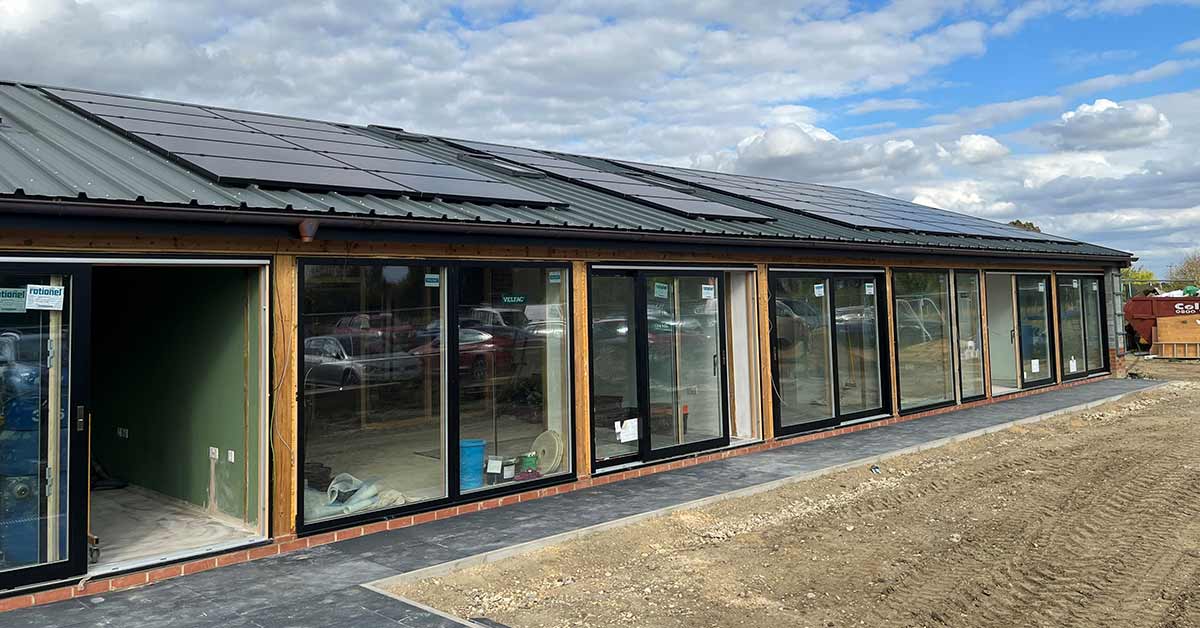
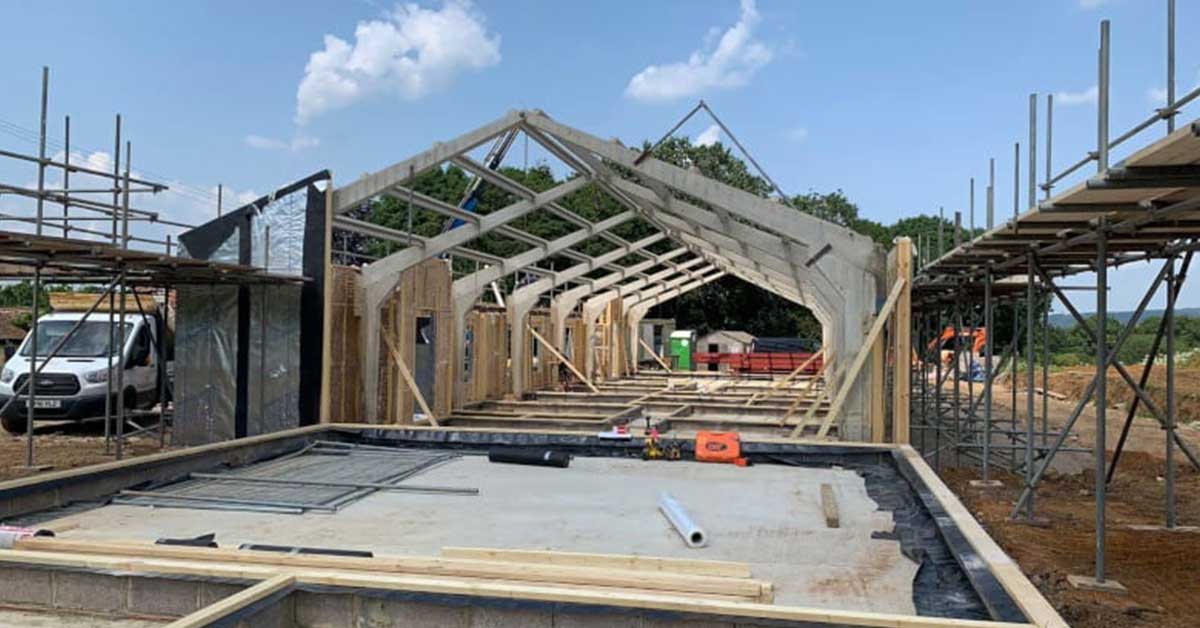
Durrants were recently invited to attend an event by CLA East to show how a 25 year old chicken shed was converted to a zero-carbon home. Nick Woolley and his wife Saffy shared with Durrants Principal Planner, Jonny Rankin, the challenges and successes they faced during the conversion process.

Planning permission initially came to life via a Class Q Prior Approval, which will be very familiar to Durrants clients. Class Q’s are a Building Consultancy mainstay, with several on the books at any one time.

The chicken shed in question benefitted from a southern elevation allowing for passive solar gain and a large bank of solar panels on the south-facing roof slope.

Having attended events at Woolley’s old HQ in Freckenham, I was aware of Nick’s advocacy for the Hockerton Housing project and the building principles therein. Having retrofitted the previous Old Rectory buildings, in speaking with Nick, I could sense the excitement at the opportunity to start from the ground up – literally – with the chicken shed. Some features we had the pleasure to view included:

  1. 300mm thick floor concrete at 300mm, giving an overall ‘U’ value of 0.1*;
  2. 300mm of floor to ceiling wall insulation, also giving an overall ‘U’ value of 0.1;
  3. Triple glazed windows;
  4. Epoxy resin wall ties (not steel) preventing thermal losses; and
  5. 440mm of insulation under roofing sheets giving a ‘U’ value of 0.055.

Onsite generation is key to the success of the zero-carbon performing home and we were abvle to view the 75 solar panels (27kWh maximum energy production) and the 3 Tesla Powerwall batteries.

All heating is solar powered, delivered by underfloor heating – only required in colder months absence solar gain.

Mechanical Ventilation and Heat Recovery (MHVR) is something we are also employing for clients on some of our current planning applications and builds and we were able to view the Vent-Axia unit chosen by Nick and Saffy. The MHVR unit changes air throughout the building roughly every four hours, exchanging ‘old’ air whilst retaining up to 80% of the heat, heating the incoming air.

Rain-water harvesting (from roof space and guttering) is collected in a 6000 litre underground storage tank. The water is then filtered and fed back into domestic use. Hot water is provide by a 450 litre, highly insulated tank, reducing the energy required to heat the water by as much as 43%.

Smart-operating Velux windows open in reaction to extreme temperatures and also close when it rains.

Particularly topical for some of our clients in this time of Nutrient Neutrality is the private sewage treatment works employed. Sewage is treated by a double, in-tandem septic tank system – which alone would treat effluent sufficiently. Thereafter, however, a reedbed filtration pond (complete with Water Voles and Frogs) removes the remaining nutrients ‘standard’ septic tanks and public sewage treatment works are currently struggling with. An important technological solution for many of our clients.

We continue to engage with the CLA and other partners to ensure we are best able to support our clients, deploy the best technologies and offer the best service possible through Durrants Building Consultancy.

The friendly team at Durrants Building Consultancy are always happy to discuss your plans and help you get your project off the ground. There is more information about our services here, but please get in touch with our Building Consultancy team to find out more on 01379 646603.

* Thermal transmittance, also known as U-value, is the rate of transfer of heat through a structure (which can be a single material or a composite), divided by the difference in temperature across that structure. The units of measurement are W/m²K. The better-insulated a structure is, the lower the U-value will be.

Posted on

Durrants submits representations to East Suffolk rural housing SPD

SPD

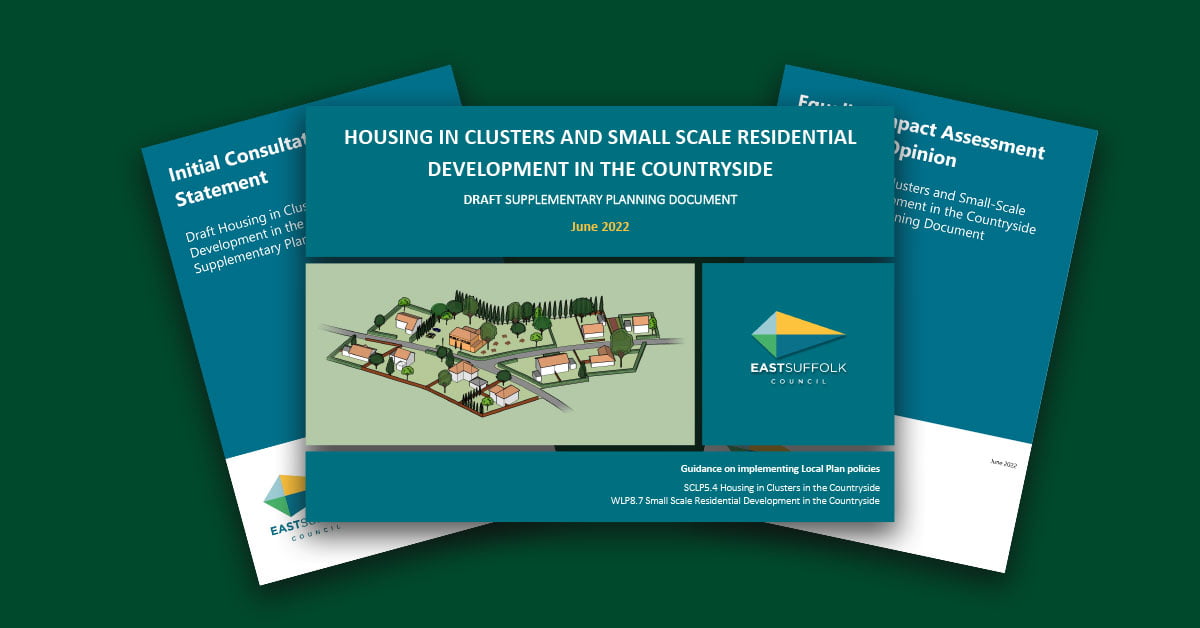
The consultation period for the ‘Housing in Clusters and Small Scale Residential Development in the Countryside Supplementary Planning Document’ (SPD) closed on Friday 5thAugust.

The document seeks to provide clarity on the interpretation of the two relevant policies relating to housing in the countryside (i.e. outside of settlement boundaries, but within groups of other dwellings) – SCLP5.4 and WLP8.7. One of the main issues the Council has sought to address in the SPD is the definition of a ‘cluster’ or ‘settlement in the countryside’. Both policies allow for ‘infill’ development in such settlements, i.e. filling in obvious gaps in a continuous built up area.

Despite the local plans both being recently adopted, officer interpretation of the policies has been inconsistent, leading to some unfair decisions for applicants. Durrants represent numerous clients whose applications have been both approved and refused against these policies. Our letter to the Council highlighted some of the inconsistencies in their previous application of policy, and most importantly, some of areas in which the SPD could fail to avoid such issues in the future. These include the acceptable size and nature of a ‘gap’, what constitutes ‘continuous built up frontage’ and how development on one vs two sides of the road is treated. 

It is our view that the SPD in its current form will only add to the existing confusion, and that the preferable solution is for officers to decide applications in accordance with SCLP5.4 and WLP8.7, as these policies are both very clear and pro-development.

We have summarised the points made in our representations here and would encourage you to take a look at the SPD online.

  • Neither the SPD nor the local plans contain any policies allowing settlements with development boundaries to grow – i.e. there is only allowance for infilling of gaps
  • The definition of a ‘gap’ is still unclear. It appears that infilling a gap containing a garden or farm access is acceptable, but containing a ‘large’ field is not. This needs to be clarified and, importantly, justified.
  • Confusion over ‘development on both sides’ as per the policy wording, which is contradicted by the diagrams in the SPD.
  • No position over whether planning approved developments count towards the cluster. We argued in our letter that they absolutely should.
  • We closed by drawing attention to a recent appeal decision on a house in the countryside, which East Suffolk lost due to their incorrect interpretation of their own policy.

No timescale has been given for the next phase of the consultation process, but Durrants will continue to engage with the process on behalf of our clients. Please do get in touch if you have a potential site that could be captured by these changes.

Jasmine Philpott, Planner

Posted on

Government announces intervention in Nutrient Neutrality challenge

nutrient neutrality challenge

On 20th July, the government announced that the Levelling Up Bill (see our article on this here) will be amended to place a new legal duty on water companies to upgrade treatment works by 2030 in an attempt to reduce water pollution.

Alongside this, Natural England are to introduce a Nutrient Mitigation Scheme, which will see the body develop woodland and wetland areas to offset nutrient pollution. Developers can then by nutrient credits to offset the impact of their proposals.

Though initial advice suggested the scheme would be in place by the autumn, it is now believed that this is in fact when Natural England will begin tendering for the new schemes.

The good news is that SME developers will be prioritised, and developers are still encouraged to provide their own mitigation solutions, with a commitment that Natural England will support, not hinder, such proposals.

This is a very positive step and a sign of swift action from the government. We are still awaiting an announcement from our local councils as to whether they plan to continue with the strategy they outlined in June (see our article on this here).

Posted on

Rural Housing Week shines a spotlight on affordable housing

rural housing week

This year’s Rural Housing Week seeks to highlight the role of housing associations (who deliver and manage affordable housing) in achieving ‘levelling up’ in rural areas. The provision of more affordable housing in rural areas is seen by many experts as key to reducing poverty in the countryside.

Despite its beauty and desirability, rural Britain faces unique economic and social challenges. Homelessness, poverty, an ageing population, low incomes and unaffordable housing are among some of the hidden issues facing our countryside.

For example, rural homelessness has risen by 115% in the past two years, with 20,000 homeless families in England, but the real figure is likely to be much higher. Similarly, more than 40% of households in rural Wales live in fuel poverty, compared with 22% in urban areas.

One of the aims of Rural Housing Week is to raise awareness of these challenges, and to highlight the benefits that affordable housing can bring to everyone living and working in the countryside.

Changing perceptions is an important part of this aim. Misconceptions about affordable housing mean that some communities do not welcome developments to their area, fearing antisocial neighbours or a dip in their property value.

To do our bit, we’ve set out some of the common myths about affordable housing below and tried to give an honest answer on whether they are myth or fact, or indeed, a bit of both.

1.  Affordable housing isn’t even affordable.     Mostly myth.

Affordable housing is an umbrella term that covers lots of different types of housing, which can get confusing. The most common are social rented, affordable rented and shared ownership. Rents are set as a percentage of open market values, and social rented is cheaper than affordable rent, which can be up to 80% of market value. Shared ownership is a method of home purchase whereby the housing association sells the purchaser between 25% and 75% of the property. The purchaser then pays rent on the remaining share, often with the option of buying more equity over time. So in conclusion, ‘affordable’ is a relative term, but affordable housing is certainly much cheaper than market housing and is aimed at those who cannot afford to buy or rent at market value.

2.  It will lower the tone of the area and impact property values.     Myth.

It’s important to remember that affordable housing tends to include a mix of rented and shared ownership housing, meaning your neighbours could be from a variety of backgrounds. The maximum income threshold to quality for a Shared Ownership home is £80,000, and ‘affordable rent’ (the most common type of rented tenure) is capped at 80% of market rent. This means it is much more likely that your new neighbours will be local working people, including young professionals, low income workers and elderly/retired people.

There is also no evidence that affordable housing reduces house prices – in fact, it often improves the vitality of an area and therefore enhances values.

3.  Affordable housing doesn’t go to local people.     Myth.

It is unusual for affordable housing to go to people out of an area, because local need is generally very high. Most parishes have a Local Lettings Plan, which prioritises local people, rather than operating a first-come-first-served approach.

The slight exception is social rented housing, which goes to those in dire need – women fleeing domestic violence, people who have been made homeless etc. It is the cheapest form of rented housing in the UK and tends to be used on a short-term basis. In most cases it will go to local people, but if someone from out of the area is in desperate need, there is a chance it could go to them.

4.  Affordable housing tenants will be antisocial.     Myth.

One of the great things about having affordable housing tenants as neighbours is that they rent from a Registered Provider, so if you’re having issues with a tenant, you can speak directly to their landlord and resolve the problem. Compare this to a neighbour who owns their home – your only options are to confront them directly or to escalate things to the Council or the Police.

Final thoughts

If you have land in a rural area which doesn’t meet the policy requirements for development, consider promoting it for affordable housing instead. You will still achieve an enhanced land receipt compared to its agricultural value, and help sustain a rural community at the same time. 

Give our team a call to discuss your next project on 01379 642233 or email us at buildingconsultancy@durrants.com

Posted on

Recent planning trends highlight the importance of hiring the right professionals for your project

planning trends

Data shows that more applications than ever are being refused on design and heritage grounds, and subsequently upheld at appeal. Following changes to the NPPF last July, a study by University College London found that the odds of planning authorities winning on design grounds have shifted from 5:7 against to 13:7 in favour.

As noted in our previous article The Levelling Up Bill: A Summary, the emerging Levelling Up Bill is also set to give more weight to heritage concerns in planning decisions. With over 24,000 listed buildings in Norfolk and Suffolk (among the highest in the UK), heritage is nearly always a consideration for planning applications in our area.

Appeal case law suggests that failure to consider heritage impacts when designing schemes is increasingly viewed dimly by the Inspectorate.

A recent appeal against the refusal of an annexe in Herefordshire was upheld on the basis that the design was not sympathetic to its setting (reference 3289070). The proposed annexe was modern in style, and used materials which could not be seen in the main house, such as timber cladding.

The main house was a neo-Tudor stone manor house which was not listed, but was close to a Grade II* Listed church, and clearly of architectural interest. No heritage assessment was submitted. Additionally, the inspector concluded that while the family’s needs for an annexe (ageing family, care needs etc.) change over time, heritage impacts are permanent, and therefore take precedence.

Durrants have secured numerous planning permissions on developments affected by heritage issues, and our team of designers are experts in providing designs which reflect their context.

We are unique in having planners, architects and a building surveyor in the same room in our Diss office, giving us the ability to design schemes in a truly comprehensive way. We understand the danger of underestimating heritage and design in applications, and have great relationships with heritage experts who can quickly mobilise to support our clients’ ambitions.

Give our team a call to discuss your project on 01379 642233 or email us at buildingconsultancy@durrants.com

Posted on

Durrants achieve approvals after Norfolk councils promise swift action on Nutrient Neutrality

nutrient-neutrality-3

The Durrants planning team are pleased to have recently secured numerous planning consents on sites outside the catchments but within the authorities affected by the recent Natural England update – see our previous article on this here.

In a recent update seminar held by representatives of the Norfolk authorities, which Durrants attended, assurances were made that a permanent solution would be found by February 2023, with further information and strategies introduced to try to free up development in the meantime. 

We were pleased to hear that staff from the councils shared developers’ frustrations with the sudden nature of the announcements, as well as what appears to be a sensible plan to find a solution. In the short term, this includes producing a more detailed map of the catchments to identify any areas within them where development could go ahead, as well as providing their own nutrient calculator to replace the flawed one published by Natural England.

It was particularly positive that the authorities are meeting regularly to ensure consistency across the county, as well as with authorities elsewhere in the country who have successfully grappled with the problem, such as Cornwall Council.

We have however seen some inconsistencies in the approach adopted by officers, which tend to centre on foul drainage and each authority’s view on septic tanks and treatment plants. Despite this, we have achieved approvals for developments involving new overnight accommodation (the trigger for nutrient neutrality) in South Norfolk and are working on others in Breckland, the Broads and Broadland authorities.

Overall, councils are working positively with us on applications outside the catchment, and we are providing the information needed to unlock decisions, with a slight delay to the original determination date (generally a few weeks). We are therefore up to speed on the nuances between authorities and would therefore encourage applicants to get in touch with the team to discuss their proposals.

Posted on

The Levelling Up Bill: A Summary

levelling up bill

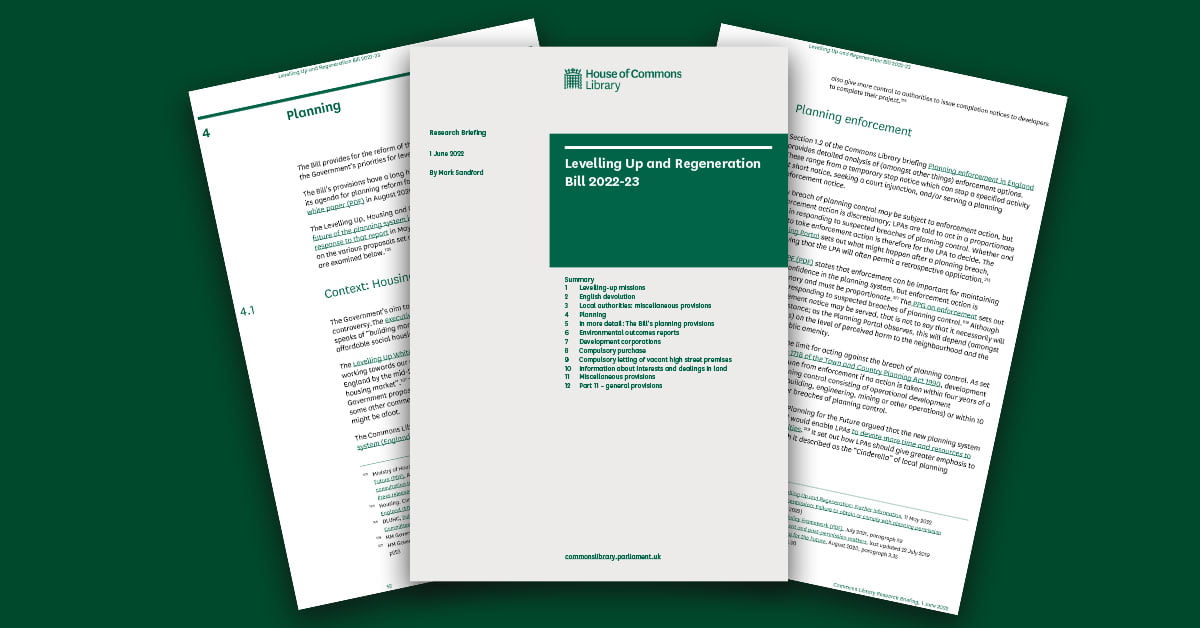
The government’s Levelling Up and Regeneration Bill saw its first reading on 11th May 2022. Touted as a ‘key component’ to reducing inequality and closing the UK’s wealth gap, the proposals contained in the Bill include various changes to the planning system.

The Bill extends to 326 pages, so Jasmine Philpott, Planner at Durrants, has attempted to summarise the proposals that could have the biggest impact on our clients.

Planning fee increase

A planning fee increase of 35% for major applications and 25% for minor applications is proposed – that means an increase from £462 + VAT to £578 + VAT for most applications. The extra revenue is intended to improve the service for applicants and the level of skill within local authorities, which can only be a good thing, but such big increases are a difficult pill to swallow in the midst of a cost of living crisis. 

Another change is the extension of the period for taking enforcement action to 10 years in all cases (it is currently 4 in some cases). This means a longer wait for Certificates of Lawfulness for some uses, and a higher risk of enforcement action.

Replacement of CIL

The government are now proposing to replace CIL (Community Infrastructure Levy) with a new levy (just ‘Infrastructure Levy’), which will be calculated on uplift in value rather than floor space. It appears that through the new levy, if, for example, build costs increase and property prices go down over time, the Levy payable would reduce to reflect that. But it will also work the opposite way, so that if your scheme grows in profit, you will pay more Levy.

And if you thought this will finally mark the end of Section 106 agreements, think again – those are here to stay.

What now?

The Bill is only at the first reading stage, and accompanying regulations and guidance have yet to be published. The Bill requires three readings in the House of Commons, and three in the House of Lords, then it receives Royal Assent, with amendments made throughout that process. The changes therefore will not take effect until at least 2024, and there is every chance that the Bill could look very different by then.

Posted on

From concept to completion – Durrants Building Consultancy

durrants building consultancy

Durrants are renowned for providing expert advice when buying or selling your home, but we are also behind many successful new build and renovation projects managed by our expert team at Durrants Building Consultancy.

Whether you have plans for a barn conversion, minor residential development or larger scale projects on existing land, we can advise you on the whole process including site appraisals and planning through to architectural design.

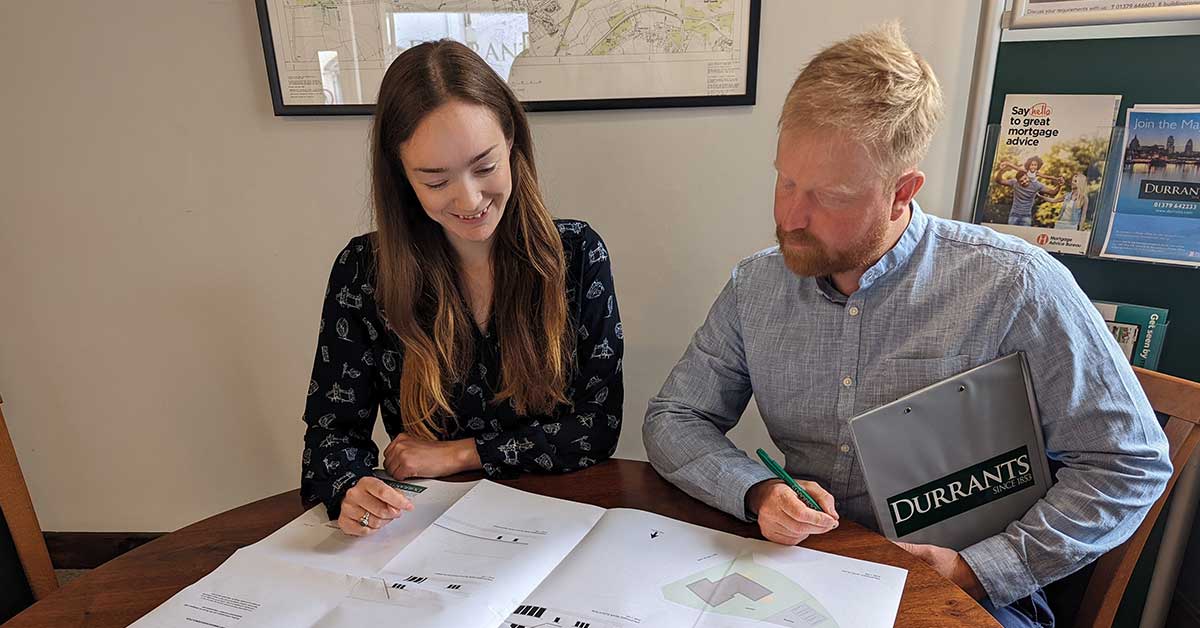
Jasmine Philpott, Planner at Durrants Building Consultancy, believes our in-house experience and capabilities make us the obvious choice when looking for a company to work with on your next project. She says: “Our key advantage is that we have architects in-house working alongside the two planners on the team. We all look at drawings together to give a fully cohesive approach to a project.

“Alongside that, the experience available within the team of both the market and the local area is second to none. We have the capability to advise and manage anything from a single house extension to promoting a site for a large-scale housing development.”

Jonny Rankin, Principal Planner adds: “I’ve worked for, and with, local authorities across East Anglia and our decades of experience in that area gives us an excellent working knowledge, so we work with Planners and Conservation Officers to achieve successful outcomes for clients.”

The team has experience in working on as many as 50 new dwellings in a large development but Durrants also often works with private individuals who are potentially looking to sell an existing piece of land or who need advice on how to convert an outbuilding.

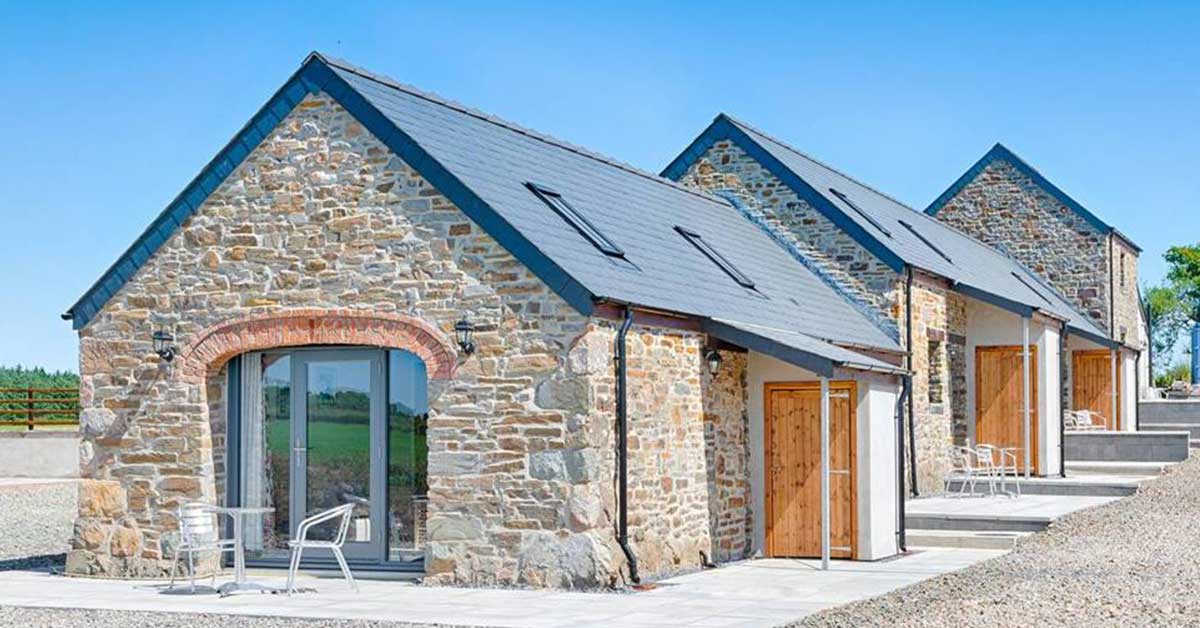
It is the variety of different projects that Jasmine says makes her role exciting. “It sounds a bit like a cliché, but you really are changing people’s lives. If a client has had a barn in their garden for years and didn’t know what to do with it and you’re able to get them planning permission, it’s quite life changing. They can decide to create a holiday home to rent out or sell it and use the money as they wish.”

The friendly team at Durrants Building Consultancy are always happy to discuss your plans and help you get your project off the ground. There is more information about our services here, but please get in touch with our Building Consultancy team to find out more on 01379 646603.

Posted on

Potential delays to planning applications in Norfolk following Nutrient Neutrality announcements

News Article Potential delays to planning applications

If your site falls within either of the catchments outlined on the maps below, brace yourself for a long wait for planning consent.

In March this year, Natural England suddenly announced that the Broads SAC (special area of conservation)/Ramsar site and the River Wensum SAC are in an unfavourable condition due to excessive nitrate and phosphate levels. Their announcement meant that any development proposals generating overnight accommodation within these catchments should not be decided unless it can be proven that the development will not impact on either of these sites. Unfortunately, this is currently impossible to do, as it relies on mitigation schemes which do not yet exist.

Any development that generates sewage will generate nitrates and phosphates, and this needs to be mitigated, either on-site through the creation of wetlands or woodlands, or off-site through large scale areas set aside for this purpose. As an example of on-site mitigation, a single dwelling could require around 2.5 acres of woodland or 0.05 acres of wetland to offset its nutrient impact. 

News Article Nutrient Neutrality announcements
News Article Nutrient Neutrality for inclusion
All authorities in Norfolk are affected, though only parts of them are in the catchments. Most of these authorities have put a hold on deciding any applications which generate overnight accommodation on sites within the catchments until they have found a solution.

Sites outside the catchment are not technically affected. However, so far the acceptance of this varies greatly between authorities. The general trend is that information is still being requested in order to prove the site does not ultimately drain into an affected area. This ranges from full drainage strategies, to communications from statutory bodies, all of which unfortunately is at the client’s cost, and comes with an extension of time on the application.

It’s important to remember that the measures only apply to development which gives rise to overnight accommodation – i.e. new dwellings, hotels, barn conversions. Agricultural development, business development and extensions which do not generate overnight accommodation are currently not affected.

Our message to clients within the catchment at this time would be to go ahead and submit your application, so that when a solution is eventually found, your application will be among the first to be decided (as there will be a backlog). And to those outside, be aware that there could be delays and potential additional cost in satisfying the local authority that your proposals are not captured by these changes.

The situation is continuously evolving, and the Planning team at Durrants are working with qualified professionals to find solutions and progress applications. We would encourage you to speak to us to discuss whether your proposals are affected, and how we can best pre-empt any issues. Details below.

Jasmine Philpott 
07710 674301
Jasmine.philpott@durrants.com

Jonny Rankin
07508 334889
jonny.rankin@durrants.com

Posted on

Where to start when extending your home

where to start when building a home extension.

Do you feel that your house would be perfect for you if you just had a bit of extra space, perhaps another bedroom, a playroom for the children or a larger dining area that opens out onto the garden? Extending your home to get the space you need rather than moving could be the right choice for you, but with so many options available and so much to know about the legal side of things it can be difficult to know where to start.

With that in mind, this article, produced by Durrants Building Consultancy in collaboration with the Mortgage Advice Bureau, gives you’re an overview of what to consider including planning permission and building regulations, costings and the importance of choosing the right architect and builder.

Do I need planning permission for my extension?

The general rule around planning permission is the larger and more significant improvements are likely to need planning permission from your local planning authority, and the smaller, less obtrusive improvements are not likely to need permission – this is known as ‘permitted development’.

Whether you need planning permission or not depends on a number of factors. As long as the plans for your extension adhere to the following rules, you won’t have to get planning permission for the work:

  • The extension isn’t higher than the highest part of the roof of the house.
  • If a single-storey rear extension, it should not extend more than 3m beyond the original wall of the house, if a semi or terraced house, or 4m if a detached house.
  • A two-storey or more extension should not extend more than 3m beyond the original wall of the house.
  • The maximum height of a single-storey rear extension is 4m.
  • A single-storey side extension should have a maximum height of 4m, and the width should be no more than half that of the original house.
  • A two-storey extension has to be at least 7m to the rear boundary.
  • Materials used need to be similar or match the appearance of the house.
  • No balconies or raised platform

Different rules apply though if you have a Listed Building or are in a Conservation Area or an Area of Outstanding Natural Beauty (AONB) or a Site of Special Scientific Interest (SSSI). If any of these apply please ring us for advice on 01379 646603.

It is good practice to apply to your local council for a ‘Lawful Use Certificate’ to confirm that your plans are indeed permitted development. This will provide evidence that the extension doesn’t require planning permission and it is good evidence if you need to prove this in the future, for example if you move house and someone asks whether permission was granted.

The Planning Portal interactive house is an excellent tool for people to get a visual idea Use this link Interactive House – Planning Portal

You may also need to have a Party Wall Agreement drawn up between yourselves and any neighbours whom the building work might affect.

Please note – if you’re planning to extend a new build house then you might need permission from the developer who may charge you a fee.

What are ‘building regulations’?

Complying with building regulations is a requirement for any type of extension as it confirms that the work carried out is structurally sound. Building regulations cover such aspects as drainage, electrics, external and internal walls, roofs etc. But first things first, you’ll need to get the architect to draw up the plans that you can then submit.

To read the full list of planning permission and building regulations, contact your local council for more information.

East Suffolk Council
South Norfolk Council

How much will my home extension cost?

Obviously the cost of an extension will vary depending on what you want and where you live. There are lots of different suggestions out there on how much an extension costs. A lot of these figures are worked out per square metre, for instance, a single-storey extension would typically cost around £1,500 per square metre. So if you were having a 3x5m extension, it might cost around £22,500 for a single-storey, or up to £50,000 for a two-storey if you want one builder to construct the whole extension. The cost will vary totally on the standard of fittings you might want in the extension, for example if you want a bespoke oak kitchen then clearly this will be more expensive.

Once you know what sort of extension you’d like, the best thing to do is get a few builders to come round and give you a ballpark quote for the cost although we recommend to get an accurate quote you will need detailed architects drawings and details usually best for these to be building regulation drawings as these will specify exactly what is required to build the extension, although you will still need to choose colours, power point locations etc.

How do I know who’s the best builder and architect for the job?

When it comes to choosing your architect and builder, you want to know that you’re using someone who is reliable, honest, experienced and capable, after all, you’re about to spend a significant amount of money on your long-term home. It is important to ensure any architect is qualified and has the required professional indemnity insurance. Some practices are architectural designers and not actually qualified architects so ask to check their qualifications if you specifically want to use an architect.

Similarly, you want a builder who is experienced and good at their craft, so it’s worth asking to look at their portfolio to get an idea of previous jobs they have worked on and what their capabilities are. Also, prepare a brief for them so they know as much about the job as possible – obviously you can share architect’s plans if you already have them. Don’t be shy about getting a 3 or 4 builders to give you quotes, and be sure to check exactly what their quote includes.

Here at Durrants Building Consultancy we have two qualified Chartered Architects who would be more than happy to discuss your home aspirations. We’ve been established in Norfolk and Suffolk for many years too, take a look at our portfolio. Over the years we’ve built a good network of tradespeople who we can recommend.

When it’s time to make your final decision it’s often a case of weighing up the quote with the time scales. For instance, one builder might be cheaper than another but has a 4-month waiting time, whereas another builder who is slightly more expensive might be able to start in the next month, so it all depends what’s most important to you.

How can I fund my home extension?

There are several options for funding an extension project. You can take out a loan for the house extension from your existing mortgage lender, or you could consider re-mortgaging. We recommend that you contact a specialist mortgage and finance expert. Durrants are proud to partner with Mortgage Advice Bureau who have a friendly, local team and can offer advice on the very latest mortgage and loan products available.

For further information about any of the information in this article please contact Durrants Building Consultancy on 01379 646603.