Posted on

Race report: 24th – 25th September – Stone Enduro

Durrants have recently pledged their support to Diss-based Planner, Jasmine Philpott, in her off-road car racing pursuit. Here’s the first of some occasional updates on her progress in events around the UK. This time: the Stone Enduro.

Keen not to miss out on driving this event in my own car, I decided to enter both the Warrior and the Excite car in the Stone Enduro, a comp safari hosted by Staffs and Shrops Land Rover Club. My choice meant twice the driving and half the rest. Ignoring all the ‘good luck’s and ‘you’re mad’s, I arrived at the farm mid-morning on the Saturday, dog and boyfriend in tow, ready for the challenge.

I quickly had a shock that made me regret my decision. The ‘enduro’ part of the title of this event apparently meant not only 2 days of racing, with night runs, but also what’s known as a ‘split and merge’, whereby instead of completing one lap at a time, you re-join the course and repeat it twice before crossing the finish line. They were planning to do 8 runs on each day. I already knew that meant 32 runs for me driving two cars, so to see this number double to 64 was quite alarming. Too late to back out now!

I walked the 6-mile course with my two navigators (one per car) – this is important because both of you need to know the route, and agree certain things, such as lines and speed. There are no pace notes allowed in comp safaris, so it’s always good to walk the course at least once. 

We made it back from the walk in time to sign on and get both cars scrutineered, a process in which the car is checked for compliance with MSUK safety standards. Driver’s briefing was next, and I was thrilled to hear that they had removed the split and merge. Apparently, a lot of people were complaining because they hadn’t brought enough fuel for double the anticipated mileage!

I was under strict instructions not to scrape, damage or crash the Excite car, and to take it very easy, whereas the Warrior is my own car and therefore my problem if I damage it. Cars are set off in order of speed, so I went out in the Warrior in the top 10, got back, had some water and wiped the dirt from my face, then sprinted over to the Excite camp and took that car round. I was very busy, but it worked.

The two cars are like night and day – like driving a Fast-Trak and then getting into an Aston Martin. But, the principles are the same, and the Excite car is a much more relaxing drive than the Warrior. It is hard to explain to anyone the physicality of racing at top speed on such rough terrain – everything hurts, your fitness has to be excellent, and you need a day off to recover and stop aching.

The Excite car ran without any mechanical issues at all. It’s a slow car, designed for wading across dunes, not zipping around British farmland. The Warrior however is aggressive, loud and perfectly built for the conditions. The weekend passed without any significant dramas, apart from me only just setting off for my last lap in time for the cut-off of 3pm (I think I went off the line at 2:58). The exhaustion started to set in as I stood in a daze during prizegiving, only to find I won 2nd in class in the Excite car and 3rd in class in my own.

Next event: Walters Arena, 8-9th October.

Find out more about Jasmine Philpott and her Dakar Rally mission
Posted on

Durrants annual Charity Clay Shoot

The winning team being presented with the winner’s trophy and prizes.

As always, Durrants annual charity clay shoot had the most wonderful autumn day by kind invitation of Phillip Kidner of Red House Farm, St Margret South Elmham.

The charity event is a firm fixture in the calendar welcoming an eclectic mix of local clients and fellow professionals.

The year’s event was won with a high score of 297/300 which is an amazing achievement.

Our charity of the year is Prostate Cancer and monies raised from the shoot will be going to them to fund vital research.

Thank you to all from Durrants who helped run the day, and the BBQ for all their efforts.

Nick Durrant, addressing contestants at the start of the day.
Posted on

Cookley & Walpole Community funding

Funds from Durrants Charity Foundation have been presented to Cookley & Walpole parishes to help with the running of two electric bikes!

The community electric bikes project has been running since 2015, based in Cookley & Walpole parishes. The launch included a competition to choose names for the two bikes. The winning names were “Dina” and “Mo” – by which they’ve been known as ever since.

The main intended (and actual) uses of the bikes, for which they are loaned out free of charge, are:

  • To save carbon by using the bikes instead of cars or motor bikes. [From detailed monitoring during the first two years of use, we estimate the ebikes have saved approximately 50kg of CO2 per year – a total of 350kg since the project started].
  • To help overcome social isolation for people who don’t have cars.

Durrants were delighted to help with this very worthy local cause and the cheque was handed over by Gabi Wones from our Halesworth office.

Posted on

Henham Steam Rally

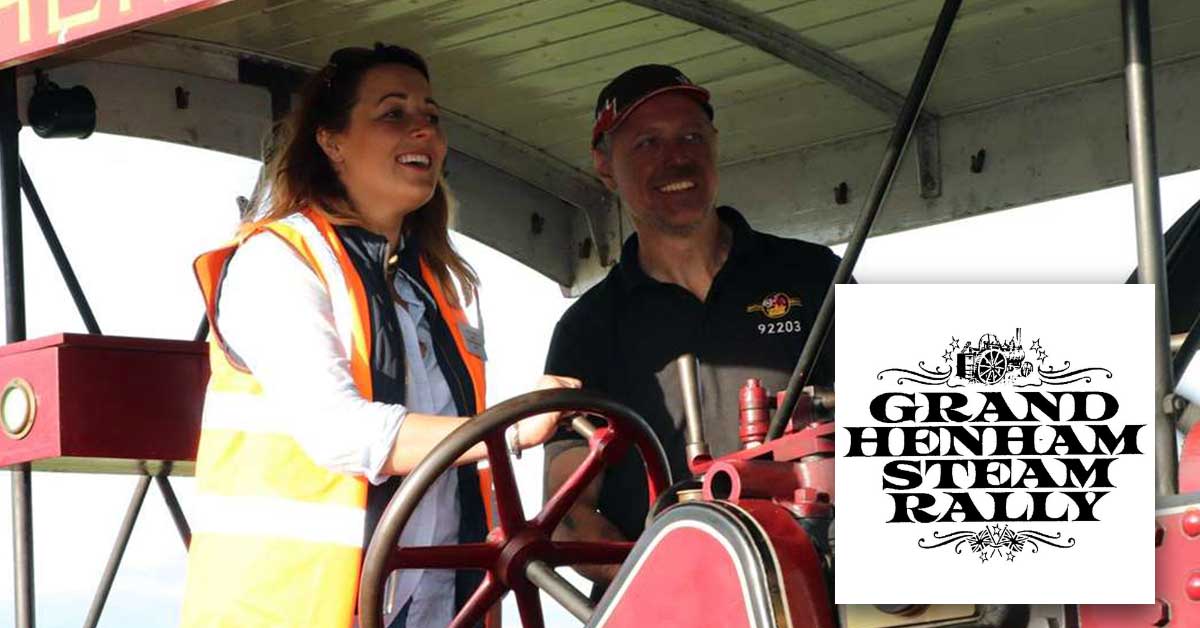
Durrants were delighted to be back at this year’s Henham Steam Rally, after an absence of two years due to Covid.

Always a firm favourite, the crowds returned to support this popular local event. As in the past, Durrants sponsored the Rally and teams from across our offices manned our stand, entertaining clients old and new.

“The Henham Steam Rally has been raising funds for local good causes for nearly 50 years, and it’s my personal favourite event to attend and support”,  said Durrants Managing Director Dominic Parravani. “We are all already looking forward to next year! Number 47!”

Posted on

Durrants sponsor in-house Planning Consultant on Dakar Rally mission

Always eager to encourage employees in their interests outside of work, Durrants have recently pledged their support to Diss-based Planner, Jasmine Philpott, in her off-road car racing pursuit.

The 29-year-old has competed in a grassroots motorsport called Competitive Safari (aka comp safari) for several years. Driving her custom-built prototype Warrior, Jasmine is regarded as the most competitive female driver in the sport since the 1990s, generally placed in the top 10 in national events.

The Warrior

Comp safari events are single-venue, off-road races in which between 30 and 50 drivers tackle a rough, fast course in a variety of different vehicles, from budget-friendly modified Land Rovers to 600bhp prototypes. Nearly all vehicles are 4×4, with classes defined according to suspension type and engine size.

The Excite Car

This year has also seen her join Excite Rally Raid as the main driver of their desert-racing-spec Mitsubishi Pajero. The team are aiming to be the first all-female British team to finish the world-famous Dakar Rally. This year has included some practice events, mainly focussing on exposure in order to raise sponsorship, with a view to compete in European Bajas in 2023 and begin training for desert racing thereafter.

Jasmine has agreed to provide regular race reports on her events this year, so keep an eye on the blog and our social media pages for more. You can also follow her journey on Instagram @offroadjasmine 

Posted on

The A to D of the Property Market

The A to D of the Property Market Article

Dominic Parravani of Durrants looks at how to manage the property market when world events seem overwhelming.

If ever we needed a crash course on how world events affect our daily lives, the past few months have provided us with a masterclass.

From the Russian invasion of Ukraine and its economic aftermath to our monarch and prime minister changing in a few weeks, there has been national bewilderment.

Of course, our press has done a great job in alerting us to all the dreadful things that could make things even worse, and this fanning of the flames of fear has sent shockwaves through all sorts of markets, including property.

But there are property market drivers that neither the press or the Russian president can affect because they have no control over such matters. These are the A to D of the property market.

A is for ambition – the personal ambition to live somewhere better, bigger, smaller, prettier, more convenient, more rural or urban.
B is for birth – as our families grow, we need more space.
C is for consolidation – people getting together to cohabit or downsizing after children have left home.
D is for death, debt and divorce – those three drivers on their own stimulate a high proportion of movement in the market.

Back in the 1980s we learned that the people we could rely on in a tough property market were ourselves, our families and our friends. Also, our estate agents. The reference to estate agents is not a glib remark: right now, with interest rates rising, lenders panicking, and buyers and sellers rightly concerned, it is the steady hand of an experienced estate agent that will provide focused calm and wise counsel.

If you are wondering about the right time to buy or sell property, remember the A to D of the property market. Individually we are not driven by war or a fallen monarch, and we shouldn’t be persuaded by rising or falling house prices. Instead, we should be driven by what is best for us as individuals.

When is the best time to buy or sell a property? Within the constraints of affordability it should be when it is most suitable for us and our families.

Posted on

March the Month for Prostate Cancer UK

March the Month Challenge
Durrants are thrilled to announce a final total of £1880.32 will be donated to Prostate Cancer UK thanks to the efforts of Tracy Walker in our Holiday Cottages team.

One in eight men will get prostate cancer in their lifetime. It’s a life changing diagnosis, but it doesn’t have to be this way. Throughout September Tracy has been raising money to help fund lifesaving research and support services for men and their families affected by the disease. The March the Month challenge saw Tracy undertake 11,000 steps each day to represent the number of men who lose their lives to the disease every year.

Tracy commented: “As a family we know only too well the devastating feeling when you are told a loved one has prostate cancer. I have learnt an awful lot in a short space of time about the varying stages of the disease and how it is tackled with different treatments.”

“As well as wanting to raise money to fund the continuing research and treatments, I also wanted to raise awareness so each day throughout September I donned my Prostate Cancer UK t-shirt and explored Reydon and Southwold. The first few days made everything seem very real and quite emotional, not something I expected.”

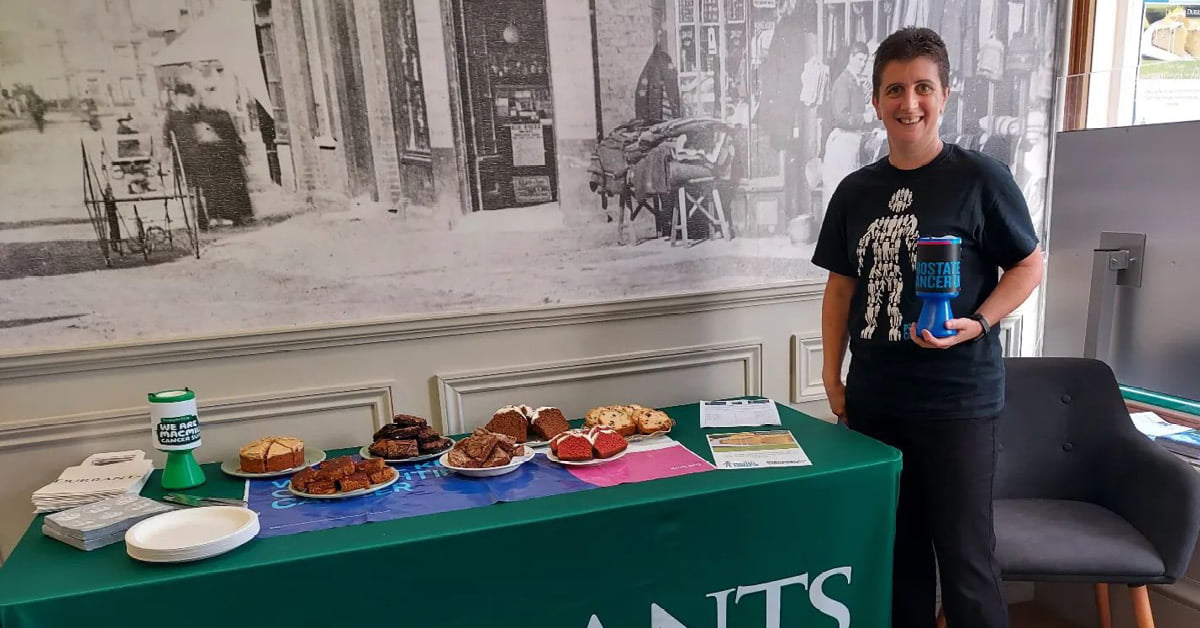
“The final day landed on the Macmillan Cancer Support coffee morning and cake sale, I couldn’t have asked for better timing. I aimed to hit the final 11,000 target by lunchtime, so I could not only celebrate with my supportive colleagues in the office, but also eat cake to regain my energy levels!”

Tracy excelled herself and her final step total was 416,853 resulting in 164.7 miles walked and £940.16 raised.

All of the team at Durrants are incredibly proud of what Tracy has achieved and we will be matching her personal total to bring the final amount raised to £1880.32. Well done Tracy!
Posted on

Durrants overturns planning refusal for rural workers dwelling

planning permission

The Durrants team are celebrating an excellent win on behalf of their client this week after securing full planning permission for a rural workers dwelling in Rumburgh, East Suffolk.

The application was made in order to allow an engineering company to continue to operate their agricultural machinery maintenance business by living on site. Durrants Building Consultancy’s in-house architects provided the supporting plans and the planning team produced the supporting planning documentation, including the Planning, Design and Access Statement.

Policy WLP8.11 of the Waveney Local Plan sets a high threshold to allow new homes in the countryside for rural workers. Applications must demonstrate an essential functional need which cannot be met by other nearby housing. The question of functional need is often, as in this case, mistakenly interpreted as applying to maintaining the welfare of livestock, excluding agricultural support services. However, Durrants outlined in the planning statement and committee speech that this is a misconception, and that both local and national policy support housing for anyone who needs to live close to their place of work in the countryside, regardless of the nature of that work. In this case the company provides agricultural machinery maintenance services to 400 clients across East Anglia.

planning permission plans

Durrants Building Consultancy set out a clear case for approval in the planning submission, including site security, business efficiency (particularly relating to a 24/7 call-out service) and sustainability. The application received letters of support from local residents, business owners, and the support of the parish council and ward members. The application was recommended for refusal by the case officer on the basis that no functional need had been demonstrated.

However, thanks to successful lobbying, the application was referred to full planning committee, where it was subject to a thorough debate by members and ultimately approved. One of the most compelling reasons for approval which emerged during the debate was site security. Members recognised the rise in rural crime and the value of living on site in preventing theft. Secondary to this was the crucial role that the applicant’s business plays in the local agricultural sector, and the importance that planning decisions play in supporting rural farming communities.

We are thrilled for our client, and pleased that members were able to see that rural workers policies are designed to be permissive in appropriate circumstances, not preventative.

Rural workers dwellings can be contentious, but with the right team of experts and a strategic approach, it is possible to secure a home close to your place of work in the countryside, and we would encourage anyone who is considering applying to get in touch with our team to discuss your ambitions.

Posted on

CLA East: A zero-carbon performing home

cla east zero carbon

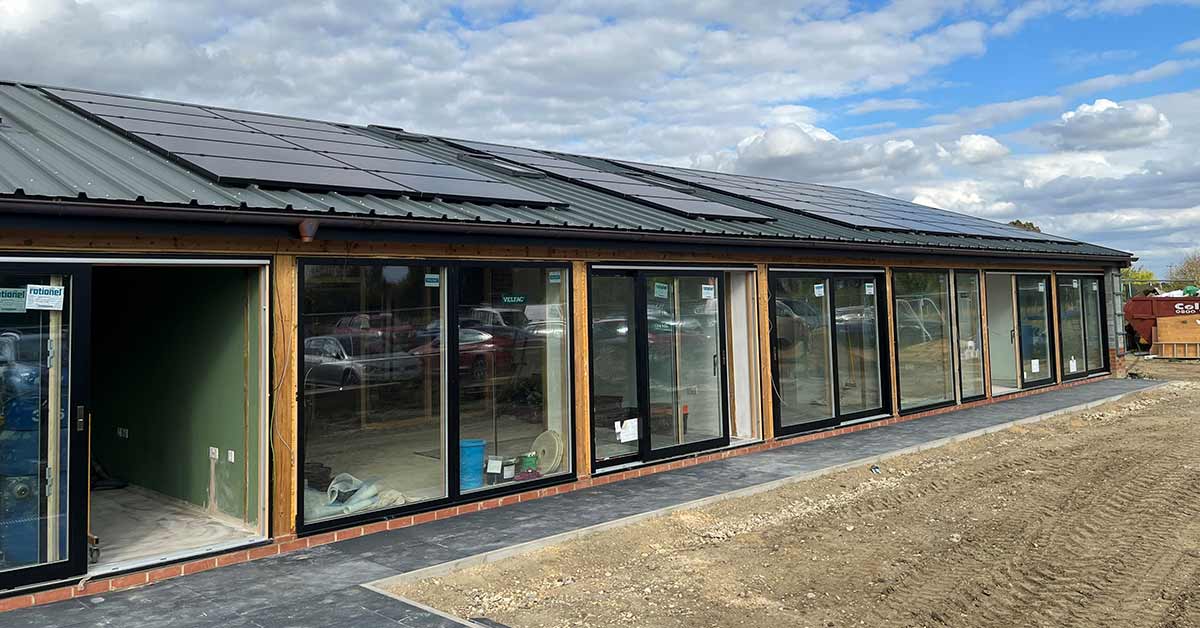
Durrants were recently invited to attend an event by CLA East to show how a 25 year old chicken shed was converted to a zero-carbon home. Nick Woolley and his wife Saffy shared with Durrants Principal Planner, Jonny Rankin, the challenges and successes they faced during the conversion process.

Planning permission initially came to life via a Class Q Prior Approval, which will be very familiar to Durrants clients. Class Q’s are a Building Consultancy mainstay, with several on the books at any one time.

The chicken shed in question benefitted from a southern elevation allowing for passive solar gain and a large bank of solar panels on the south-facing roof slope.

Having attended events at Woolley’s old HQ in Freckenham, I was aware of Nick’s advocacy for the Hockerton Housing project and the building principles therein. Having retrofitted the previous Old Rectory buildings, in speaking with Nick, I could sense the excitement at the opportunity to start from the ground up – literally – with the chicken shed. Some features we had the pleasure to view included:

  1. 300mm thick floor concrete at 300mm, giving an overall ‘U’ value of 0.1*;
  2. 300mm of floor to ceiling wall insulation, also giving an overall ‘U’ value of 0.1;
  3. Triple glazed windows;
  4. Epoxy resin wall ties (not steel) preventing thermal losses; and
  5. 440mm of insulation under roofing sheets giving a ‘U’ value of 0.055.

Onsite generation is key to the success of the zero-carbon performing home and we were abvle to view the 75 solar panels (27kWh maximum energy production) and the 3 Tesla Powerwall batteries.

All heating is solar powered, delivered by underfloor heating – only required in colder months absence solar gain.

Mechanical Ventilation and Heat Recovery (MHVR) is something we are also employing for clients on some of our current planning applications and builds and we were able to view the Vent-Axia unit chosen by Nick and Saffy. The MHVR unit changes air throughout the building roughly every four hours, exchanging ‘old’ air whilst retaining up to 80% of the heat, heating the incoming air.

Rain-water harvesting (from roof space and guttering) is collected in a 6000 litre underground storage tank. The water is then filtered and fed back into domestic use. Hot water is provide by a 450 litre, highly insulated tank, reducing the energy required to heat the water by as much as 43%.

Smart-operating Velux windows open in reaction to extreme temperatures and also close when it rains.

Particularly topical for some of our clients in this time of Nutrient Neutrality is the private sewage treatment works employed. Sewage is treated by a double, in-tandem septic tank system – which alone would treat effluent sufficiently. Thereafter, however, a reedbed filtration pond (complete with Water Voles and Frogs) removes the remaining nutrients ‘standard’ septic tanks and public sewage treatment works are currently struggling with. An important technological solution for many of our clients.

We continue to engage with the CLA and other partners to ensure we are best able to support our clients, deploy the best technologies and offer the best service possible through Durrants Building Consultancy.

The friendly team at Durrants Building Consultancy are always happy to discuss your plans and help you get your project off the ground. There is more information about our services here, but please get in touch with our Building Consultancy team to find out more on 01379 646603.

* Thermal transmittance, also known as U-value, is the rate of transfer of heat through a structure (which can be a single material or a composite), divided by the difference in temperature across that structure. The units of measurement are W/m²K. The better-insulated a structure is, the lower the U-value will be.

Posted on

Durrants at Henham Steam Rally this weekend

henham steam rally

The Durrants team will be out in force at the ever-popular Grand Henham Steam Rally near Southwold this weekend.

It’s the 46th running of the event which features family entertainment coupled with displays of steam power and other vintage vehicles and machinery. There’s over 1000 exhibits and working demonstrations – and there’s even a chance to steer a steam engine yourself!

Durrants will have a stand at the Rally on both Saturday and Sunday where you can meet members of our team and find out about all the services we provide from our Southwold office.

We look forward to seeing you there if you’re coming along. Gates at Henham Park are open from 10am to 6pm on both days.

Posted on

Hot box

Property search in Norfolk

Dominic Parravani of Durrants looks at the human side of buying and selling a home.

In the days before technology invaded the estate agency industry – flooding it with helpful and not so helpful ‘proptech’ – estate agents kept buyers’ details written on index cards that were stored in plastic boxes. These were called hot boxes in the trade and all estate agents had them.

Depending on how long buyers had been looking for a property, each card bore the scars of persistent scrutiny and revision. The cards told the stories of individuals or families. Notated were names, contact details, price range information, aspirations, desires, and even dreams. The longer the search, the fuller, more dog-eared and coffee-stained the cards became until they formed part of their subjects’ stories reflecting the struggles to make dreams come true.

Why so much detail on the cards?  Because how on earth can you find what someone truly wants in a home unless you’ve asked them and understood their answer?

Nowadays the computer has long overtaken the hot box. In some ways it’s an efficient change. But in other ways it depersonalises the process. You can’t get much more personal than a home and its occupants. A hot box was a list of human beings being human and looking for their safe place.

Strokes on a keyboard rather than scribbled notes have replaced the hot box – the lowest of low tech. But all is not lost. Because the best estate agents still have hot boxes, it’s just that these days they keep them in their heads. They haven’t needed them much over the past few years. But now they are being pressed back into service as the market changes in favour of buyers.

So, when you’re looking for someone to sell your home check out several agents. Find out what they think your property is worth and why. But also discover if their head is a hot box. Ask who’s buying, what they might be able to pay, and why they might want your house. This knowledge is basic estate agency. If someone has to use a computer to match home with buyer they’re in the wrong job, because it still needs a human to understand what another human wants and why.

Durrants would be delighted to provide a free market valuation of your property. To find out what makes Durrants different book a free valuation today.

Posted on

Durrants submits representations to East Suffolk rural housing SPD

SPD

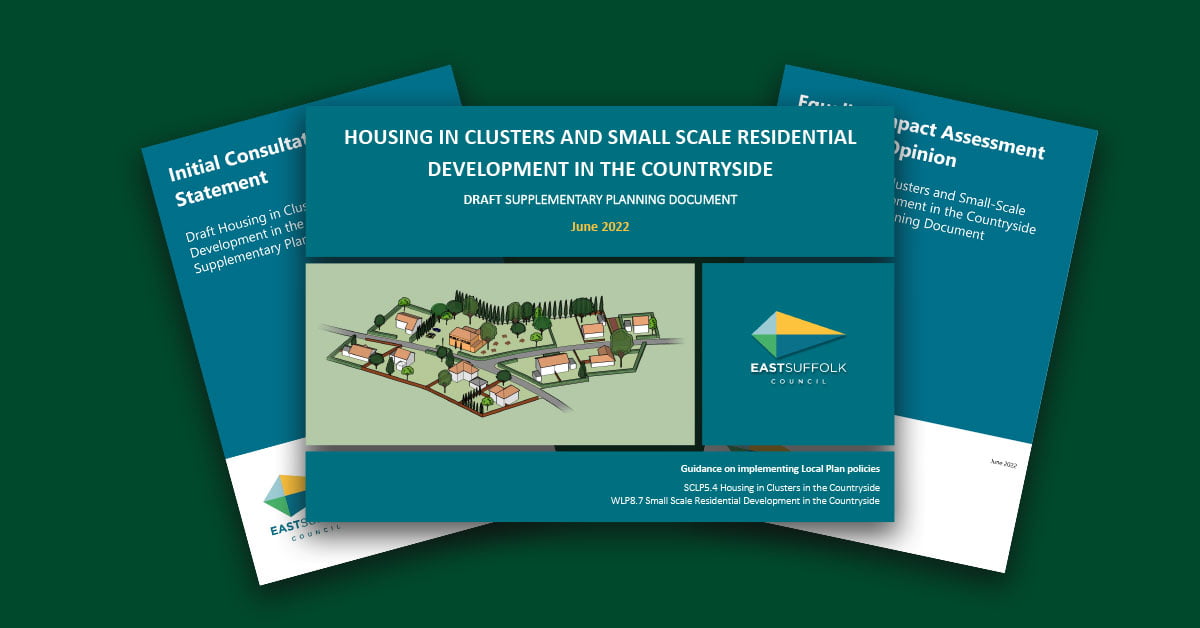
The consultation period for the ‘Housing in Clusters and Small Scale Residential Development in the Countryside Supplementary Planning Document’ (SPD) closed on Friday 5thAugust.

The document seeks to provide clarity on the interpretation of the two relevant policies relating to housing in the countryside (i.e. outside of settlement boundaries, but within groups of other dwellings) – SCLP5.4 and WLP8.7. One of the main issues the Council has sought to address in the SPD is the definition of a ‘cluster’ or ‘settlement in the countryside’. Both policies allow for ‘infill’ development in such settlements, i.e. filling in obvious gaps in a continuous built up area.

Despite the local plans both being recently adopted, officer interpretation of the policies has been inconsistent, leading to some unfair decisions for applicants. Durrants represent numerous clients whose applications have been both approved and refused against these policies. Our letter to the Council highlighted some of the inconsistencies in their previous application of policy, and most importantly, some of areas in which the SPD could fail to avoid such issues in the future. These include the acceptable size and nature of a ‘gap’, what constitutes ‘continuous built up frontage’ and how development on one vs two sides of the road is treated. 

It is our view that the SPD in its current form will only add to the existing confusion, and that the preferable solution is for officers to decide applications in accordance with SCLP5.4 and WLP8.7, as these policies are both very clear and pro-development.

We have summarised the points made in our representations here and would encourage you to take a look at the SPD online.

  • Neither the SPD nor the local plans contain any policies allowing settlements with development boundaries to grow – i.e. there is only allowance for infilling of gaps
  • The definition of a ‘gap’ is still unclear. It appears that infilling a gap containing a garden or farm access is acceptable, but containing a ‘large’ field is not. This needs to be clarified and, importantly, justified.
  • Confusion over ‘development on both sides’ as per the policy wording, which is contradicted by the diagrams in the SPD.
  • No position over whether planning approved developments count towards the cluster. We argued in our letter that they absolutely should.
  • We closed by drawing attention to a recent appeal decision on a house in the countryside, which East Suffolk lost due to their incorrect interpretation of their own policy.

No timescale has been given for the next phase of the consultation process, but Durrants will continue to engage with the process on behalf of our clients. Please do get in touch if you have a potential site that could be captured by these changes.

Jasmine Philpott, Planner