Posted on

Government consults on permitted development rights

permitted development

The Department for Levelling Up, Housing and Communities has recently announced a consultation which could see major expansions to permitted development rights, particularly for residential conversions. If adopted, the proposed changes will be the biggest shake-up of the GPDO since 2015, and would introduce more opportunities for converting buildings to residential use as well as for farm diversification.

The consultation is the first stage of a long process to become legislation, and runs until 25thSeptember 23. Durrants plans to make representations to the consultation, mostly in support of the proposed changes.

We have summarised the changes that could create the biggest opportunities for our clients below.

Enhanced opportunities under Class Q

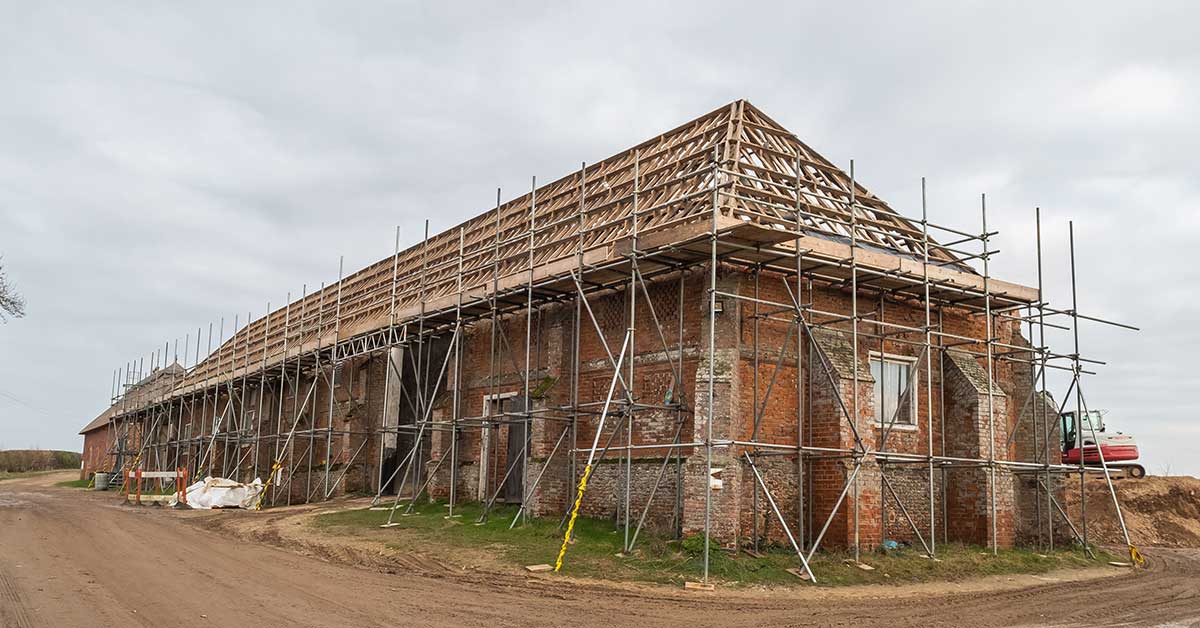
Class Q is a powerful means of converting redundant agricultural buildings to dwellings, and remains one of the most popular planning instructions at Durrants. In its current form, Class Q allows for the creation of up to 5 dwellings of a cumulative maximum of 865sqm, achieved through combining ‘smaller’ dwellings (100sqm and below) with ‘larger’ dwellings (over 100 sqm).

The consultation proposes to double the overall maximum number of dwellings to 10, with a maximum area of 1,000 square metres. The separation of ‘larger’ and ‘smaller’ dwellings is proposed to be replaced with a single maximum of either 100 or 150sqm per home.

It is also proposed that the current requirement for a building to have last been solely in agricultural use will be removed, allowing buildings which have been used for other purposes, such as storage, to be afforded Class Q rights. This would be a very positive change, as many landowners are currently able to neither use or convert redundant buildings because of the strict rules around their historic use.

A surprising proposed addition to the Class Q legislation is the introduction of extensions to the rear elevation of the barn. Currently, only the building itself can be converted, with no parts (including window cills etc) permitted to extend beyond the existing footprint of the building. Introducing a single storey extension of no more than 4m deep would be a radical change. Note, the extension would only be possible on previously developed land, i.e. farmyard hardstanding.

In addition to these major changes, the government are also seeking to introduce a minimum dwelling size of 37sqm and allowing Class Q development on article 2(3) land (such as national parks, AONBs, conservation areas etc.). There is also a proposal to expand Class Q rights to buildings in other uses such as forestry and equestrian buildings.

Expanded Class R rights

Currently, Class R allows agricultural buildings to change to flexible commercial use, the latter of which is limited in its scope. It is proposed to add new uses such as outdoor sports and recreation to allow greater farm diversification. Consideration is also being given to encouraging more mixed uses, such as a farm shop adjacent to a hotel, which is currently not possible under Class R. There will be an increase from 500 to 1,000 sqm for the total area which can change use, and views are being sought on whether to remove the need for prior approval (i.e. an application) for certain changes.

Tweaks to agricultural permitted development rights

Less radical changes are proposed to agricultural permitted development rights, with an increase in total floor area proposed, from 1,000sqm to 1,500sqm for new buildings under Class A (larger agricultural units) and to 1,250 for extensions to buildings under Class B (smaller units).

A new restriction is proposed, removing permitted development rights on Scheduled Ancient Monuments.

Our thoughts

The proposed changes to the Class Q legislation are particularly promising, and could remove some of the unnecessary hurdles currently faced by many applicants. An increase in the number of dwellings but a reduction in their size will help to deliver smaller, more affordable homes and discourage a proliferation in executive converted barns. Introducing flexibility around agricultural use is the biggest win, and the ability to convert stable blocks, barns which have temporarily been used as storage etc would open up many new opportunities for redundant buildings, which would be welcome.

The changes to Class R and Part 6 are less radical, but still helpful nonetheless.

Even if only some of the proposed amendments make it into legislation, this consultation represents an acknowledgement on the government’s part that certain planning limitations are needlessly restricting opportunities for rural development. We are hopeful that the pertinent changes are ultimately adopted.
Posted on

Let’s hear it for bungalows

bungalows

Dominic Parravani, Managing Director of Durrants, looks at bungalows – a property market sector that offers buyers bags of often overlooked potential.

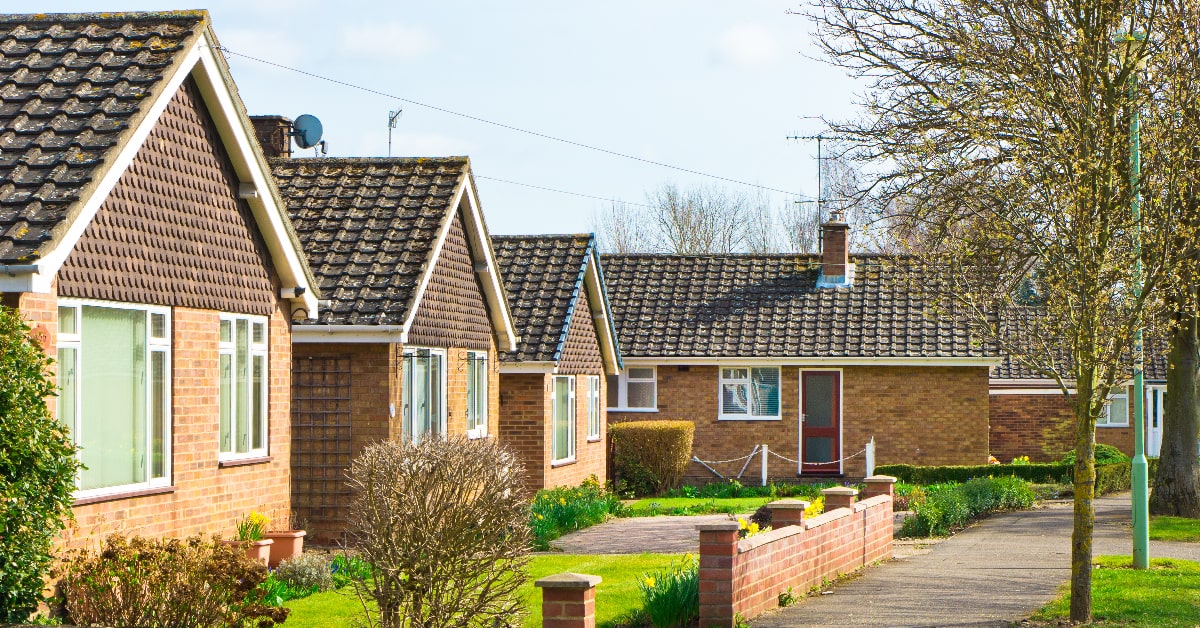
Let’s speak up in favour of the bungalow. Those who live in these stairless homes understand what many others do not; that life is beautiful in a bungalow.

Single-storey dwelling is easy and convenient, and in essence, is like living in a superb apartment but with huge benefits – no one above and below you and your own front door and parking area.

Plus, as bungalows can occupy a larger footprint than storied houses and often enjoy wide plots, there is usually a sizeable garden to use as a sophisticated outdoor room for relaxing and entertaining.
 
Bungalows are not just for the older generation; they can often be easily altered to provide an effective and modern open-plan style of living for all age groups, including families.
 
Many house buyers are just that – buyers of houses. Most don’t think to add bungalows to their search. They should, as even the humblest bungalow can often offer more lifestyle options than one might think.
 
Of course, subject to planning permission, one could always add another floor and double the living space or, in the case of some poorly constructed inter-war bungalows built on great plots in wonderful locations, one could knock the place down and start again.

Then there are the thousands of bungalows built in seaside towns when those of pensionable age wanted little more from life than to retire to the coast. Some retirees still do, but their go-to bungalow option is now starting to register with a wider group of buyers.
 
We are not just house experts; we are bungalow experts too. Please call us to discover the range and advantages of bungalow living.

Posted on

What is the housing market doing?

housing market

The latest take on the housing market from Durrants Residential Area Manager George Berry.

What is the housing market doing?

This is the question I am naturally being asked daily. There is no escaping it has its challenges and arguably the most challenging since the financial crash of 2008. However, it is far from doom and gloom! The biggest difference from 2008 is banks still want to lend.

I appreciate for many the cost of borrowing is higher with the increase in interest rates. But the simple fact is many still want and need to move for a variety of reasons. When factoring affordability, all it means is buyers will adjust their budgets.

We are moving into what we historically refer to as a more ‘normal’ market. The difficulty for many is understanding what that looks like as it has been so long. It simply means that there is more emphasis on buyers and focusing on their searches rather than the days of properties selling themselves due to the imbalance with supply and demand.

It is exactly for this reason why High Street agents are needed now more than ever and online agents will become more exposed as buyers and vendors need support and that can only come from real people.

We all know that historically property is the safest long term investment and for those looking to take a long term view then there is no reason why now is not a good time to move. Will prices adjust? There is evidence to suggest they are starting to change but all that will happen is negotiation will play a bigger part to find a transaction on both sides that all are happy with. Again, real agents will come into their own in this regard.

It is very easy to feel disheartened at times like these but it is imperative to look at the long term bigger picture and remain with a glass half full perspective!

Please contact me to discuss any property needs you may have.

Posted on

Our guide to the Renters Reform Bill

renters reform bill

Introduced to Parliament on 17th May, the Renters Reform Bill (RRB) forms part of the government’s ‘levelling up’ plans, and seeks to provide more security to tenants, whilst clamping down on irresponsible landlords.

The Bill is in the earliest stage of the parliamentary process, as it needs to pass through the House of Commons, then the House of Lords before receiving Royal Assent – a process likely to take around 18 months. The changes will apply to housing only, and it has since been clarified that they will not apply to student lets.

We summarise the key changes and potential implications for landlords and tenants below.

Abolishing no-fault evictions

Currently, under Section 21 of the 1988 Housing Act, a landlord can evict a tenant for no reason and without establishing fault on the part of the tenant, providing they give 2 months’ notice. This is proposed to be removed entirely, with landlords only being able to evict tenants under ‘reasonable circumstances’. These include anti-social behaviour, rent arrears of at least 2 months, occurring at least 3 times in the last 3 years, or if the landlord needs to sell the property or allow family to move in. These options are only available 6 months into the tenancy. The legal system will also be altered to expedite the process for lawful evictions, which is currently slow.

The end of Assured Shorthold Tenancies

Most renters currently sign an AST, generally involving an initial fixed period of 6 or 12 months, following by a monthly rolling tenancy which can be ended by the tenant or the landlord. ASTs will be replaced with periodic tenancies, which are month-to-month from the beginning of the tenancy. In addition to landlords losing the ability to evict a tenant without reason, the new tenancies will require the tenant to give 2 months’ notice to end their tenancy.

Limitations on rent increases

Under the new proposals, landlords will only be allowed to increase the rent once per year, and they must give tenants 2 months’ notice. Rent review clauses will be removed from tenancies, and tenants will have new routes to challenge rent increases through tribunals.

A new ombudsman

A new ombudsman will be established, with powers to compel landlords to remediate their properties, apologise to tenants or even compensate them for up to £25,000.

No more discrimination over pets, benefits or children

Under the current regulations, landlords can refuse to let to tenants who have pets or children or who are on benefits. This will change. Tenants can request to have a pet, and the landlord has 42 days to respond to a request. Consent cannot unreasonably be withheld. It will also be illegal to refuse to let a property to people with children or who are on benefits. One area of concern at this stage is that under the current bill, landlords will not be able to evict a tenant who has defaulted on their rental payments as a result of their universal credit payment being delayed.

Expansion of ‘Decent Homes Standard’

Currently, only affordable housing is required to meet certain standards in relation to the condition of properties, meaning a large number of private rental properties (25% in fact) are sub-standard. The Decent Homes Standard will apply to private rental properties, with landlords having a legal obligation to remediate their properties. Council’s enforcement powers will be strengthened, and the ombudsman will help to enforce the new standard.

How it will be implemented

Once the Bill has received Royal Assent and becomes law, the government will give 6 months’ notice before its implementation, by which point all new tenancies will be governed by the new rules. Existing tenancies will have a further 12 months to convert to the new system.

Our thoughts

This is widely considered to be the largest shakeup of the private rental sector in over 30 years. There are just over 4.4 million households in private rented accommodation in England (around 20% of households), and this is forecast to grow. Clearly, action needed to be taken to address the poor standard of some private rented accommodation and to provide more security to tenants.

The general consensus is that it will be harder for landlords to gain possession for no reason, but possibly quicker and easier to evict tenants who have breached their tenancy. The need for a tenant to fall behind on rent 3 times over a cumulative 6 months in 3 years before they can lawfully be evicted will be very worrying for buy-to-let landlords with only one property and/or a mortgage.

Raising standards of accommodation can only be a positive change, as well as the increased security for tenants. Good quality rented accommodation is a necessary option when house prices are high.

One of the possible consequences of the new bill is that buy-to-let landlords may leave the market. This would result in an increase in availability of homes to buy, potentially reducing house prices, but a resulting decrease in rental properties, pushing rental values up.

There are technicalities to resolve still, such as how a landlord can demonstrate that they genuinely have family who wish to move in (i.e. definition of family etc.), but it is very unlikely that the bill will be in its current form by the time it becomes law.

In conclusion, these changes are perhaps not as radical as the headlines might lead us to believe, but certainly seem more favourable for tenants than for landlords.

Posted on

Introducing George Berry

george berry

Durrants are pleased to welcome George Berry who has joined as Residential Area Manager for our Diss and Harleston offices.

George has been an estate agent for his entire working career, with over 25 years’ experience in both the South East and East Anglia.

He said: “I’ve always loved it. Property still excites me now, and looking after people through the biggest and probably most emotional transaction they will be involved in has just been fantastic.”

Although much has changed in estate agency since George started his career with the advent of the internet, he believes there has more recently been a movement back towards personal contact. “Post COVID, we’ve seen a bit of a shift with people wanting contact with people. That’s why that personal connection we have with our clients is so important.

“It’s been great to see already from the teams in our Diss and Harleston offices that people are afforded time. We all know how fast time goes but every member of both offices has demonstrated that, if you want to, you can slow it down to give people the time they need.”

Being given time to decide on a next move is just one important part of the jigsaw. George is also keen to stress how an experienced estate agent such as Durrants will always have the edge over an ‘online only’ competitor.

He says: “I think there’s the assumption that you can put a property on the internet and it sells itself. That can happen in a busy market, but those of us who have been in an agency for a long time all know that the main bit of the process is once the sale is agreed.

“Being able to hold it all together and nurturing a sale – the progression role is far more detailed and far more involved now than it has ever been, and that’s where the online agents fall down. It’s difficult to get hold of people who know what is going on.

“I have certainly advised clients when sales are agreed to be very wary if an online agent is involved in the chain, because to manage that chain through can be very precarious.”

George promises a warm welcome to anyone who phones or drops into Durrants with an enquiry about a property they wish to buy or sell.

“I’ve noticed already in the short time since I joined that everyone who contacts us gets our full attention and we are 100% focused on them. That’s something that has been missing for me in other situations I’ve been in previously, especially in the South East where everything can seem rushed. We want to make people feel valued and that’s what’s really important.”

To arrange a valuation of your home or a viewing of a property, please get in touch with our Diss or Harleston offices. Full contact details of all our branches across South Norfolk and North Suffolk can be found here.

Posted on

Be A Medal Winner

be a medal winner

Dominic Parravani, Managing Director of Durrants, looks at a key feature home-buyers are adding to their wish lists this year.
 
Many of those who saw the Chelsea Flower Show featured on TV recently, or better still attended the annual event in person, would have been struck by the more natural turn garden designers have taken this year. Not only that but considerable time and skill were given to smaller multi-use plots and even balconies – in some cases deep enough only for a tiny chair. The creativity was as spectacular as it was beautiful.
 
While there was the usual heavy lifting of giant boulders for rushing mountain streams and huge established trees for shade and drama in the show gardens, attention by the designers was also given to intimate city and even industrial landscapes. Weeds, for once, were encouraged.
 
Garden designers understand public taste only too well, and so do estate agents. Since the start of the pandemic, the importance of outdoor space has been rising in the minds of home buyers, whether it is for the horticulturally minded or for those who demand a deck with room for eating, relaxing and barbecuing. Outdoor entertaining in our warming climate is very much in.
 
There was a time years ago when a good kitchen would sell a house. Then it was well-planned kitchens and bathrooms. More recently it has been open plan ground floor living. But now outdoor spaces are very much the thing. A property’s exterior has become almost as important as its interior. It doesn’t matter how small or large the area is as long as the most has been made of it.
 
So if you are getting your property ready to sell you should of course focus on the interior, but don’t forget the outside relaxing area. Our advice is to channel your inner Monty Don and make the most of your garden, terrace or balcony. With the increasing importance of outside space to buyers, not doing so could lose you a gold medal of a deal.

Posted on

Branch focus: Beccles

beccles

Lisa Brown is Residential Sales Manager at our Beccles branch. She has been with Durrants since 2010 and has an extensive background in property law and conveyancing.

She keeps one key motto in mind when talking about the main difference between Durrants and other estate agents. Lisa said: “When I first joined Durrants, a colleague I worked alongside told me, ‘We don’t actually sell houses, we move people’, and I think that has stuck with me. It’s not just about the bricks and mortar, it’s about the person and what their needs are.

“So, the fact that the heart of Durrants’ business is people and their needs is what drew me to want to work here and why I’ve stayed so long.”

Lisa added: “You’ve got to love property and you’ve got to love people in this industry and I’m amazed how many don’t. It’s interesting when I ask someone why they chose Durrants to market their property rather than another agent, they often say ‘well, you actually liked my house’, whereas they say others made no comment as they walked around.”

Durrants is at the heart of Beccles, a town that is growing in popularity as visitors to Suffolk and Norfolk look for alternatives to well-known coastal attractions. “I’ve been amazed how many people have discovered this area in recent years,” said Lisa. “There’s a recognised tourist industry here. Some lovely cottages in the town that are holiday cottages have been netting incomes that aren’t dissimilar to the amounts that cottages have been getting in Southwold.”

Lisa also points to a more varied property market in the area. “The great thing about property in Beccles, as opposed to somewhere like say Southwold where it’s very investor-led, is that you have a nice mixture of first-time buyers, families, upsizing, downsizing – and all those different facets of life changes means that the cogs will keep turning even in a bad market.”

With people searching more widely for homes that offer better value for money, Lisa believes the Beccles area is increasingly coming up on the radar. “It’s only about half an hour from Norwich and 20-25 minutes from the coast, there’s the river and its proximity to The Broads. Beccles is a thriving town with lots of good independent businesses and well-regarded schools. If you want to be close to both city and coast and enjoy a buzzing little market town, Beccles is definitely worth considering.”

To arrange a free valuation of your home or a viewing of a property, please contact our Beccles branch on 01502 712122 or email beccles@durrants.com.

Posted on

King Of All He Surveys

King Charles III may have been made lifetime steward of many great houses and castles, but our new monarch has also shown that he is adept at identifying homes ripe for renovation.
 
While the king isn’t exactly short of funds, he has something equally important – a great eye. Additionally Charles has demonstrated enormous vision in vernacular architecture and town planning over the years.
 
As a first-time buyer the king’s entry into the property market was his Cotswolds home, Highgrove. Given a more classical facade and then subject to a garden transformation, Highgrove became a house fit for a future king. In carrying out the renovation Charles put into action his many thoughts on organic gardening and horticulture.
 
Using 400 acres of Duchy of Cornwall land adjacent to Dorchester, Charles, as the Prince of Wales, oversaw the planning and execution of Poundbury, an experimental town extension. This gave him the opportunity to re-examine many of the urban and rural planning ideas he outlined in his book, A Vision of Britain, published in 1989. Today Poundbury is no longer an experiment; it is a successful and thriving community of almost 6000 residents with its own property micro market.
 
In saving Dumfries House in Scotland from being sold and the priceless contents scattered all over the world – a fate that has befallen so many of our great houses – King Charles not only protected for the nation an exceptional stately home but provided valuable jobs and training opportunities for the local community. The king’s drive to protect, skill to reimagine and instinct for sustainable housing has also been employed in properties in Wales, Cornwall and even Romania.
 
But in taking on these projects King Charles has done nothing more than we do when buying and bringing up-to-date property worthy of our love and attention. We mirror the king in conservation, investing for the future, providing work for local tradespeople and turning homes into castles.
 
Our king understands housing: our governments, of whichever persuasion, should try to do the same.

Posted on

Durrants are the perfect partner for new homes

hew homes

Durrants New Homes department are the perfect partner for building a relationship, if you are looking for new homes developments. Lily Lawrence is our New Homes Consultant and is responsible for our bespoke service to property developers who are looking to build a partnership.

Lily says: “We are the only agents in the area with fully qualified in-house specialists covering planning, architecture and surveying. Our Building Consultancy team can assist with every step of the process.

“Our agricultural team have great relationships with landowners, so we can often identify suitable plots of land for developers.”

“Having worked with a number of local developers, we know the importance of not only managing their existing development, but also having an eye on what is coming next,” Lily added. “Our relationship with landowners can often extend to knowing in advance where plots of land may be available in the future, which puts Durrants well ahead of our competitors.”

Lily says building relationships is what she loves the most about her job. “It’s lovely to see the gleam in someone’s eye when they finally move into a home they love,” she says.

“It’s more than just a house, it’s a lifestyle. It might be a house where they are going to raise their children, or it could be a last move for someone as they retire. We recognise that it’s always an important decision and so I love helping people through that process to completion.”

Whether you are a developer looking for land & working together, or if you’re interested in a home at one of our current developments, please get in touch with our New Homes team at Durrants.

Posted on

Durrants donates play equipment to Bungay pre-school

emmanuel
Durrants are delighted to have been able to donate some new play equipment to Emmanuel Pre-School in Bungay.
 
The pre-school is a non-profit making organisation and relies heavily on donations so we were thrilled to support their important work with a new climbing frame and slide which the children are already making good use of.
 
A number of young children with special educational needs have joined Emmanuel recently and the new play equipment helps to improve their motor skills as well as their physical and mental development. 
 
The children presented us with a thank you card and homemade cake on a recent visit to say thank you. We hope you have many happy days playing in the future! 
Posted on

A guide to the process of creating a Neighbourhood Plan

neighbourhood plan

Neighbourhood planning was introduced in 2011, and as of the end of 2021, there were around 2,800 neighbourhood plans in existence.

Once ‘made’ (i.e. adopted), neighbourhood plans have full weight, and are effectively considered part of the local plan and are therefore a material consideration in planning decisions.

Below is a quick guide to the process for making a neighbourhood plan.

1. Designation/definition of the neighbourhood plan area (Reg 14)

The neighbourhood plan group identifies the geographic area that their NP will cover and submit this to the local authority for designation. In most cases, the local authority will consult the public before designating a plan area. The local authority has 13 weeks to make a decision.

2. Preparation of the plan

This stage includes preparing policies that shape the growth and priorities of the area for 15-20 years. It can include a call for sites if the area is identified for growth in the local plan – in fact, it must identify opportunities for housing growth in this case and cannot be used to stop development where it has been identified as needed.

3. Publicity and consultation (Reg 14)

The Plan must be publicised for 6 weeks, with comments invited from local stakeholders and residents, as well as statutory consultees and bodies. The plan must be adjusted to accommodate comments.

4. Submission of the neighbourhood plan to the local authority (Reg 16)

The Plan is then submitted to the local authority, who ensures that it complies with relevant processes and legislation. If it passes this stage, the Plan is then published for a further 6 weeks for comment. 

5. Submission of the neighbourhood plan to an independent Examiner

The Plan and any responses received during step 4 are sent to a selected Examiner. The Examiner provides a report to the local authority and neighbourhood planning group giving his or her recommendation as to whether the plan is suitable. The local authority ultimately decides whether the plan is suitable for referendum.

6. Referendum

This is the final vote to adopt/make the plan. Everyone living in the designated area who is registered to vote can vote in the referendum. If more than 50% are in favour of the plan, it is formally considered for adoption by the local authority.

7. Neighbourhood plan is ‘made’

It is now a material consideration in planning decisions.

The Planning team at Durrants is currently undertaking a review of all emerging neighbourhood plans in our area. Look out for an update on this soon – there may be an opportunity to promote your site through your neighbourhood plan.

Posted on

Spring into action

spring

Dominic Parravani of Durrants takes a look at the property market as we enter the prime spring buying months.

In property there are top-down people and bottom-up people. The top-down people seem to believe that it is the wealthy who drive the property market.

On the other hand, the bottom-up people think that first time buyers drive the market. They think market entrants kick-start the chain of events that gives momentum to the market as a whole.

But whatever one believes there is little doubt that from top to bottom most of the action in the market right now is being propelled by need rather than ambition. With fewer aspirational buyers around, all UK regions saw a slowing in price growth in the first quarter of 2023, with most seeing small year-on-year falls – according to Nationwide.

But these falls are not great.  Indeed, they probably represent asking prices that are more optimistic than realistic in these conditions, and certainly do not reflect some of the gloomy predictions of a number of property market commentators about falling values this year.

Without a number of kick-start incentives such as stamp duty reduction and the help-to-buy scheme, the market is once again on its own. Higher interest rates have caused house buyers to take a breath, while buy-to-let investors, severely hit by those mortgage rates, are holding fire.

Whilst the property industry often dislikes government intervention, it is the government who can kick start the market again. This will not be through direct intervention but by making the correct economic decisions for the UK as a whole. Because the market isn’t driven by the bottom or the top. It is driven by national confidence through fiscal competence.

Having said that, let’s not forget that some savvy people will be taking full advantage of a lull in the market this spring. Perhaps they are heeding the words of the legendary billionaire oilman, J Paul Getty, who said, “Buy when everyone else is selling, and hold on until everyone else is buying”.

Get a free valuation of your property by filling in our online form, or just drop into any of our branches for a friendly chat about your next move.